Rainbow table attacks are a specialized form of password hash cracking that trades storage for speed. Instead of guessing every password from scratch, tools such as RainbowCrack use precomputed hash chains to look up a matching plaintext. This article explains the workflow, the main RainbowCrack utilities, performance trade-offs, and the ethical rules that must guide any authorized password audit.
Important: Use these techniques only on systems you own or have explicit written permission to test. Unauthorized password cracking is illegal and unethical.
What a Rainbow Table Attack Does
A cryptographic hash is designed to be one-way. A rainbow table attack does not reverse the hash mathematically. It stores precomputed chains that connect possible plaintexts to hashes. During a crack, the tool applies the same reduction and hashing steps to the target hash, then searches for a matching endpoint. If it finds one, it reconstructs the chain to recover the plaintext.
Key characteristics:
- Best suited to fast, unsalted hashes such as MD5, SHA-1, and NTLM.
- Ineffective against properly salted hashes and slow password hashing functions.
- Storage requirements can become enormous.
- Success depends on the table charset, password length, and coverage.
The RainbowCrack Toolset
RainbowCrack is one of the most widely known rainbow table tools. Its workflow is divided into three stages:
1. rtgen: Generate Tables
rtgen creates rainbow tables for a specific hash algorithm, character set, and plaintext length. A typical command looks like this:
rtgen md5 loweralpha-numeric 1 7 0 3800 33554432 0
The parameters define the hash algorithm, charset, minimum and maximum password length, table index, chain length, chain count, and part index. These choices directly affect table size, generation time, and cracking probability. Generating a useful table set can take hours or days and may consume hundreds of gigabytes.
2. rtsort: Sort Tables

After generation, tables must be sorted so that rcrack can search endpoints efficiently:
rtsort *.rt
Sorting is essential. Unsorted tables are impractical for fast lookups, and large table sets may require significant disk I/O and temporary storage.
3. rcrack: Crack Hashes
Once tables are sorted, rcrack searches for a target hash:
rcrack *.rt -h <hash>
For multiple hashes, an authorized tester can use a hash list:
rcrack *.rt -l hashes.txt
The result is either the recovered plaintext or a clear indication that the hash is not covered by the available tables.
Planning an Authorized Password Audit
Before running any tool, define the scope and rules of engagement.
- Permission: Obtain written authorization from the system owner.
- Scope: Confirm which hashes, accounts, and systems are in scope.
- Objective: Decide whether the goal is policy validation, incident recovery, or compliance testing.
- Hash Type: Identify the algorithm and whether salts are used.
- Resources: Estimate CPU, GPU, RAM, and storage needs.
- Data Handling: Store recovered passwords securely and delete test data when finished.
A controlled lab is ideal. Use sample hashes or test accounts rather than production credentials whenever possible.
Choosing Table Parameters
Rainbow table performance is a balancing act.
- Charset: Larger character sets increase coverage but explode table size.
- Password Length: Every additional character multiplies the search space.
- Chain Length: Longer chains reduce table size but increase the time per lookup.
- Chain Count: More chains improve success probability but require more storage.
- Table Count: Splitting work across multiple tables can improve coverage.
Modern password policies often require long, mixed-character passwords. As a result, rainbow tables are less effective than they once were. A table that covers short lowercase passwords may be useless against a 12-character passphrase with symbols.
Performance and Storage Trade-Offs
Rainbow tables are a time-memory trade-off. They can crack faster than brute force when the target hash is covered, but they require substantial storage. Practical considerations include:
- Use fast SSDs for sorted tables.
- Compress or archive tables that are not in active use.
- Organize tables by hash type, charset, and length.
- Avoid duplicating tables across systems.
- Monitor disk space because generation can fill volumes quickly.
For large audits, distributed generation and cracking may be necessary. However, scaling should never bypass authorization or data protection controls.
Defenses Against Rainbow Table Attacks
The best defense is to make precomputation useless.
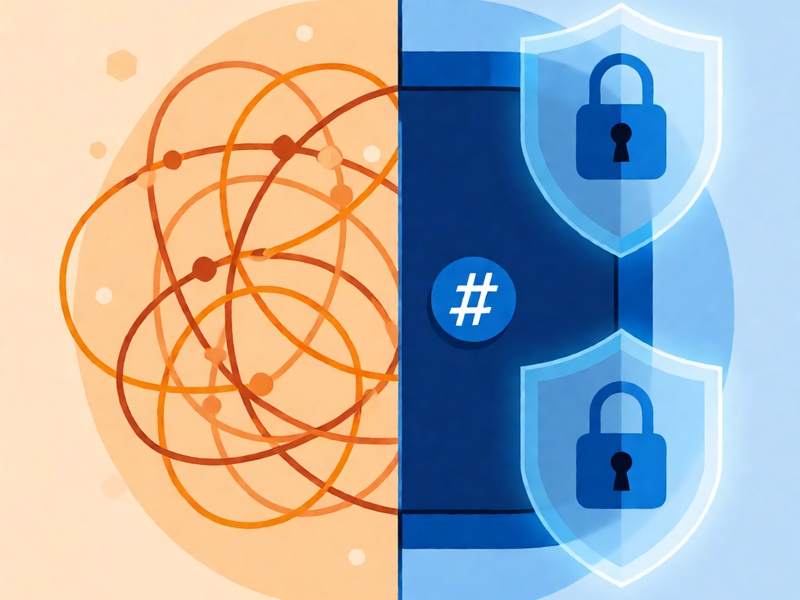
- Use Unique Salts: A per-user random salt ensures that identical passwords produce different hashes. Rainbow tables cannot cover every possible salt.
- Use Slow Password Hashing: Algorithms such as Argon2, scrypt, bcrypt, and PBKDF2 with high iteration counts make each guess expensive.
- Enforce Strong Password Policies: Longer passwords and passphrases increase the search space.
- Add Rate Limiting and Lockouts: These controls slow online attacks and reduce the value of recovered credentials.
- Enable MFA: Multi-factor authentication helps protect accounts even if a password is cracked.
- Monitor for Credential Stuffing: Detect repeated login attempts and compromised password reuse.
Salted, slow hashing is the standard recommendation for password storage. It does not make systems invulnerable, but it removes the economics that make rainbow tables attractive.
Ethical and Legal Boundaries
Rainbow table tools are dual-use. They can help defenders audit password strength, but they can also be misused. Always follow these rules:
- Test only systems you own or have explicit permission to assess.
- Respect privacy laws, contracts, and organizational policies.
- Do not retain recovered passwords longer than necessary.
- Report findings through the agreed channel.
- Never use recovered credentials to access data outside the scope.
Unauthorized access or password cracking can lead to criminal penalties, civil liability, and loss of trust.
Alternatives and Context
Rainbow tables are not the only password auditing method. Dictionary attacks, rule-based mangling, mask attacks, and hybrid attacks are often more flexible. Tools such as Hashcat and John the Ripper can incorporate wordlists, rules, and masks without the massive storage overhead of rainbow tables. For modern salted hashes, targeted dictionary and rule-based attacks are usually more practical.
Rainbow tables remain useful for understanding time-memory trade-offs, legacy unsalted hashes, and specific forensic or educational scenarios. They are one part of a broader password security assessment toolkit, not a universal solution.
Conclusion
Using RainbowCrack and similar tools responsibly means understanding both the technology and the boundaries. Generate tables only when the hash type and scope justify it, sort and store them efficiently, and interpret results with accuracy. Most importantly, apply the technique only in authorized environments. The strongest takeaway for defenders is simple: salt every password hash and use a slow, modern password hashing algorithm. That combination makes rainbow table attacks impractical and protects users far more effectively than password complexity rules alone.