Cardano offline mnemonic recovery is the safest way to verify or restore a wallet without exposing your seed phrase to an online device. Whether you use Daedalus, Yoroi, Eternl, Typhon, Ledger, or Trezor, the core rule is the same: the mnemonic never touches the internet. This guide walks through a practical air-gapped workflow using open-source Cardano tools, from booting a clean OS to deriving CIP-1852 addresses and confirming that your seed phrase matches the wallet. For broader wallet recovery techniques across Bitcoin, Ethereum, and Cardano, see Crypto Wallet Recovery Guide.
Why Offline Recovery Matters for Cardano
A Cardano mnemonic is not just a backup code. It is the master key to your ADA, tokens, NFTs, and staking rights. If malware, a browser extension, clipboard hijacker, or phishing page captures it, an attacker can drain the wallet. Offline recovery reduces that risk by keeping the seed phrase inside an air-gapped machine that has no Wi-Fi, Bluetooth, Ethernet, or cellular connection.
Common situations that require Cardano offline mnemonic recovery include:
- A wallet was deleted, reinstalled, or corrupted.
- You need to verify whether a paper backup is correct before moving funds.
- You are restoring an old Byron, Shelley, Icarus, or hardware-wallet seed.
- You remember only part of the phrase and need to test candidate words safely.
- You want to create a watch-only wallet while keeping signing keys offline.
Before You Start: Safety Checklist
Before entering any seed words, prepare the environment carefully.
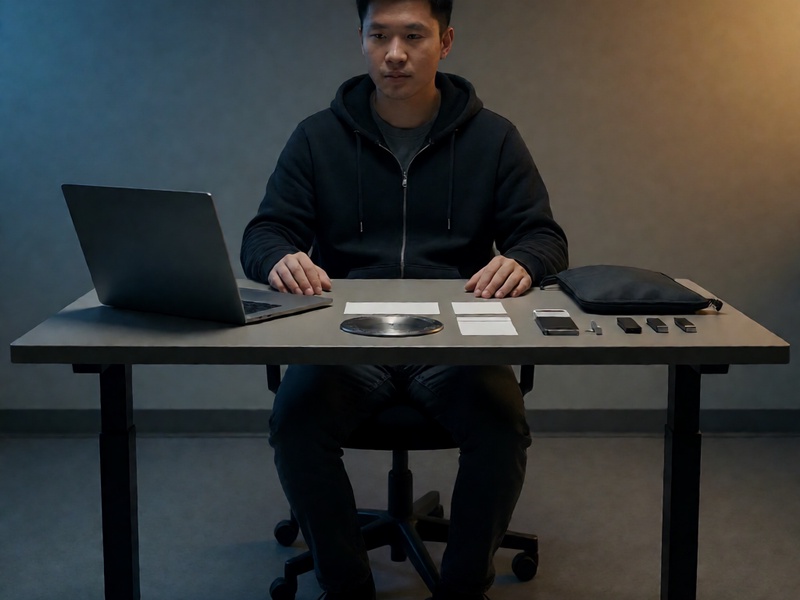
- Use a dedicated air-gapped computer or a live USB system such as Tails or Ubuntu. Do not mount your normal internal drive.
- Disable or physically remove Wi-Fi, Bluetooth, Ethernet, and cellular adapters.
- Write the mnemonic on paper or a metal backup plate. Do not photograph it, scan it, email it, or store it in a password manager on an online device.
- Download
cardano-addresses,cardano-wallet, andcardano-clifrom official repositories on a separate online machine. Verify SHA256 checksums and, when available, GPG signatures. - Transfer tools with a clean USB drive, but never transfer the seed phrase on that drive unless the drive is encrypted and used only offline.
- Work in a private room without cameras or smart speakers. Cover windows if necessary.
- After recovery, power off the machine to clear RAM. If you used a live USB, reboot without saving state.
Understand Cardano Mnemonic Types and Derivation
Cardano wallets do not all use the same mnemonic format or derivation path. Restoring with the wrong settings can produce valid-looking but empty addresses.
- Shelley / Icarus wallets typically use 15-word or 24-word BIP39 mnemonics and CIP-1852 derivation.
- Legacy Byron wallets may use 12-word Daedalus-style mnemonics that are not standard BIP39 phrases.
- Hardware wallets such as Ledger and Trezor usually use 24-word BIP39 recovery phrases, but the Cardano app applies its own account and address derivation rules.
The most common Shelley derivation path is:
- Payment key:
m/1852H/1815H/0H/0/0 - Stake key:
m/1852H/1815H/2H/0/0 - Change address:
m/1852H/1815H/0H/1/0
If you used a BIP39 passphrase, sometimes called a 25th word, you must enter the same passphrase during recovery. A wallet spending password is not the same thing. If you forget a real BIP39 passphrase, the derived addresses will not match.
Step-by-Step Cardano Offline Mnemonic Recovery
Step 1: Boot into an Air-Gapped Environment
Start the clean OS and confirm that networking is disabled. Open a terminal and disable shell history so your seed words are not logged:
set +o history
Create a temporary RAM-backed working directory. If your live OS supports it, mount /tmp as tmpfs, or create a small encrypted container that exists only in memory.
mkdir -p /tmp/cardano-recovery && cd /tmp/cardano-recovery
Step 2: Enter and Verify the Mnemonic Safely
Type the mnemonic directly from your paper or metal backup. Avoid copy-paste from a clipboard, because clipboard content can be captured by other processes. If you must use a file, create it locally in the RAM directory and delete it immediately after use.
read -s -p 'Enter mnemonic: ' MNEMONIC
echo $MNEMONIC > phrase.txt
Check the word count. Shelley-era phrases are usually 15 or 24 words. Check each word against the official BIP39 English word list. Watch for common mistakes: abandon versus ability, art versus artefact, or a missing word in the middle. Extra spaces and uppercase letters can also cause failures, so normalize the phrase to lowercase with single spaces.
Step 3: Derive the Root Key and Cardano Addresses
Using cardano-addresses, derive the root private key from the recovery phrase. This command reads the phrase from phrase.txt and writes an extended root key:
cardano-address key from-recovery-phrase Shelley < phrase.txt > root.xsk
Next, derive the first payment key and public address:
cardano-address key child 1852H/1815H/0H/0/0 < root.xsk > payment.xsk
cardano-address key public --with-chain-code < payment.xsk | cardano-address address payment --network-tag mainnet > payment.addr
Derive the stake key and stake address:
cardano-address key child 1852H/1815H/2H/0/0 < root.xsk > stake.xsk
cardano-address key public --with-chain-code < stake.xsk | cardano-address address stake --network-tag mainnet > stake.addr
Display the generated addresses and compare them with an address you already know from the wallet, a blockchain explorer, or a previous transaction. If the first payment address matches, the mnemonic, passphrase, wallet type, and derivation path are almost certainly correct. If it does not match, test other wallet types such as Byron, Icarus, or different account indices before assuming the backup is wrong.
Step 4: Restore to Wallet Software or Stay Offline
If you only need to verify the seed, destroy the temporary files and power off. If you need to restore spending access, you have two main choices.

- Import into a clean wallet on a trusted online device. This is easier but exposes the mnemonic to a network-connected machine. Use it only if you plan to move funds to a newly generated wallet immediately.
- Keep signing offline. Import only public keys or addresses into a watch-only wallet on an online device. Build and sign transactions on the air-gapped machine, then transfer the signed transaction to a node for broadcasting. This is slower but safer for long-term storage.
After recovery, create a new wallet with a fresh mnemonic and transfer your ADA if you suspect the old phrase was ever exposed.
Step 5: What If You Remember Only Part of the Phrase?
Partial mnemonic recovery is possible but becomes exponentially harder as more words are missing. Start by confirming the words you know and their exact positions. Use the BIP39 checksum to reject invalid combinations. On an air-gapped machine, you can write a small script that tests candidate words against cardano-addresses and compares the derived address with your known address. Tools such as btcrecover can be adapted for some Cardano workflows, but they often require customization.
Never attempt partial recovery on a machine that is connected to the internet. Even one leaked word reduces the search space dramatically. Only recover wallets you own and can prove ownership of.
Common Pitfalls and How to Avoid Them
- Wrong wallet type: Byron, Shelley, and Icarus can produce different addresses from the same words.
- Wrong derivation path: Account index or address index differences will generate a different address.
- BIP39 passphrase errors: A missing or mistyped 25th word changes the entire wallet.
- Word order mistakes: BIP39 checksums may still pass for some swaps, so verify the address, not just the checksum.
- Network mismatch: Mainnet and testnet addresses look different. Use the correct network tag.
- Phishing pages: No legitimate support agent, wallet update, or giveaway will ever ask for your seed phrase.
- Unverified tools: Always verify downloads. A fake CLI tool can steal your mnemonic during recovery.
Post-Recovery Security Best Practices
Once your Cardano offline mnemonic recovery is complete, treat the old phrase as compromised if it was ever stored digitally, typed into a phone, or shared. Move funds to a new wallet with a new 24-word phrase. Back up the new phrase on metal, split it across multiple secure locations, and consider multisignature or hardware-wallet setups for large holdings.
Routine checks matter. Every six months, restore your backup in an air-gapped environment and confirm the derived address matches. This catches faded paper, incorrect word order, and accidental transcription errors before they become permanent losses.
For more detailed recovery playbooks covering Bitcoin, Ethereum, MetaMask, Electrum, Ledger, and advanced seed phrase recovery, visit Crypto Wallet Recovery Guide. The site covers BIP39/BIP32 fundamentals, offline dictionary attacks, password cracking with btcrecover and HashCat, and practical cold-storage recovery strategies.
Final Thoughts
Cardano offline mnemonic recovery is not just a technical procedure. It is a security discipline. By using an air-gapped machine, verifying your tools, deriving CIP-1852 addresses, and comparing them with known wallet addresses, you can confirm a backup without exposing it to the internet. If something does not match, slow down and test one variable at a time: wallet type, derivation path, passphrase, word order, and spelling. With patience and the right offline workflow, you can recover access to your ADA while keeping your seed phrase out of reach of attackers.