If your Armory mnemonic words are out of order, the wallet may reject the phrase as invalid or, worse, derive a completely different Bitcoin address. This is a common and frightening situation: all the words are present, but one swap, one misplaced line, or a fully shuffled backup can make a valid seed phrase useless. The good news is that Armory mnemonic words out of order repair is sometimes possible, especially when you know the word count, the backup format, and at least one receiving address. The key is to work offline, verify every guess with a checksum and address match, and never expose the phrase to an online device.
This guide explains how to diagnose Armory and BIP39-style backup formats, test small ordering mistakes, use tools such as btcrecover and custom scripts, and prevent permanent loss. For a broader set of verified wallet recovery workflows, see Crypto Wallet Recovery Guide at /.
Understand Why Word Order Matters in Armory and BIP39
A seed phrase is not a bag of words. It is an ordered cryptographic instruction. In BIP39, the 12 or 24 words encode entropy plus a checksum. The checksum is derived from the entropy, and it is distributed across the last bits of the final word. If you change the order of even two words, the resulting entropy changes, and the checksum almost always fails. If the checksum happens to pass, the derived seed will still be wrong, producing empty addresses.
Armory adds an important twist. Older Armory wallets used a legacy paper backup and deterministic wallet format that is not always BIP39. Some Armory backups use Armory's own word encoding and root key derivation. Modern imports or third-party tools may involve BIP39, but you cannot assume every Armory mnemonic is BIP39. Before you run BIP39 permutation scripts, identify:
- Word count: BIP39 uses 12, 15, 18, 21, or 24 words. Armory legacy paper backups may use a different count or structure.
- Wordlist: BIP39 English words are from a fixed 2048-word list. Armory legacy words may come from a different list.
- Backup type: Paper backup, root key, fragmented backup, or BIP39 seed phrase.
- Known addresses: Any Bitcoin address that ever received funds from the wallet is your strongest verification target.
If the words are BIP39, checksum filtering is your best friend. If the words are legacy Armory, you need Armory-specific restore tools or a recovery specialist who understands the old Armory key derivation.
Safety First: Prepare an Offline Recovery Environment
Never type a shuffled Armory phrase into a website, cloud note, chatbot, or online wallet. A single leak can drain the wallet once the correct order is found. Use an air-gapped computer, a live Linux USB, or a dedicated offline machine with networking disabled. Keep phones, cameras, and smart speakers away. Write words on paper or metal, not in screenshots.
A safe workflow looks like this:
- Disconnect the recovery computer from the internet before entering any words.
- Use open-source tools that you can inspect and run locally.
- Keep the seed phrase offline until the correct order is verified.
- Verify against a known address rather than trusting a wallet balance shown by an online service.
- Sweep funds to a new wallet only after the seed is confirmed and the new backup is secure.
For a curated checklist of offline recovery practices, visit the Crypto Wallet Recovery Guide at /. It covers Bitcoin, Ethereum, MetaMask, Electrum, Ledger, and legacy wallets, with an emphasis on avoiding key exposure.
Diagnose the Misordering Pattern
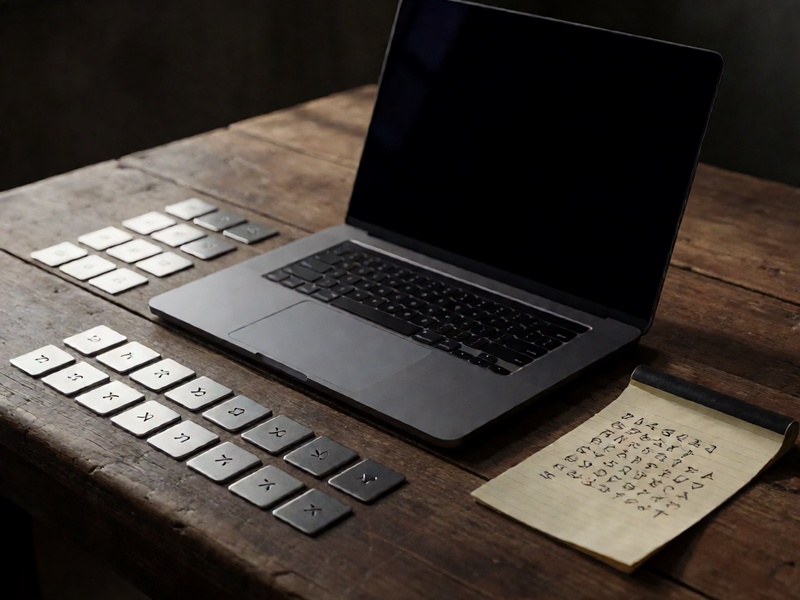
Not all order problems are equal. Your repair strategy changes dramatically depending on how many words are misplaced.
Small Swaps and Adjacent Transpositions
If you copied a backup by hand, the most common error is two adjacent words swapped, or a word moved one or two positions. With 12 words, there are only 66 possible two-word swaps and 11 adjacent swaps. You can test these manually or with a small script in minutes. With 24 words, the number grows, but adjacent swaps are still only 23 possibilities. Start with the simplest hypothesis: only one or two words are out of place.
Known Position Constraints
Maybe you remember the first word, the last word, or a distinctive middle word. Use those anchors. If the last word is unknown but you know it must satisfy the BIP39 checksum, you can test candidate last words from the wordlist. If you remember part of the phrase order, split the problem into smaller blocks and permute only the uncertain section.
Fully Shuffled Phrases
A fully shuffled 12-word BIP39 phrase has 12 factorial possibilities: 479,001,600. The checksum rejects about 15 out of 16, leaving roughly 30 million candidates. That is large but not impossible for optimized code on a modern CPU or GPU, especially if you have a known address to test. A fully shuffled 24-word phrase is 24 factorial, which is astronomically impossible to brute-force. In that case, you need additional constraints, partial memory, a passphrase clue, or professional help.
Repair Method 1: Checksum Filtering with an Offline Script
For BIP39 phrases, the fastest first pass is to generate permutations and check the mnemonic checksum. This will not prove the wallet is correct, but it eliminates invalid orders. Here is a minimal Python example for a small number of misplaced words:
from itertools import permutations
from mnemonic import Mnemonic

mnemo = Mnemonic('english')
words = ['abandon', 'ability', 'able', 'about', 'above', 'absent', 'absorb', 'abstract', 'absurd', 'abuse', 'access', 'accident']

for p in permutations(words):
    phrase = ' '.join(p)
    if mnemo.check(phrase):
        print(phrase)
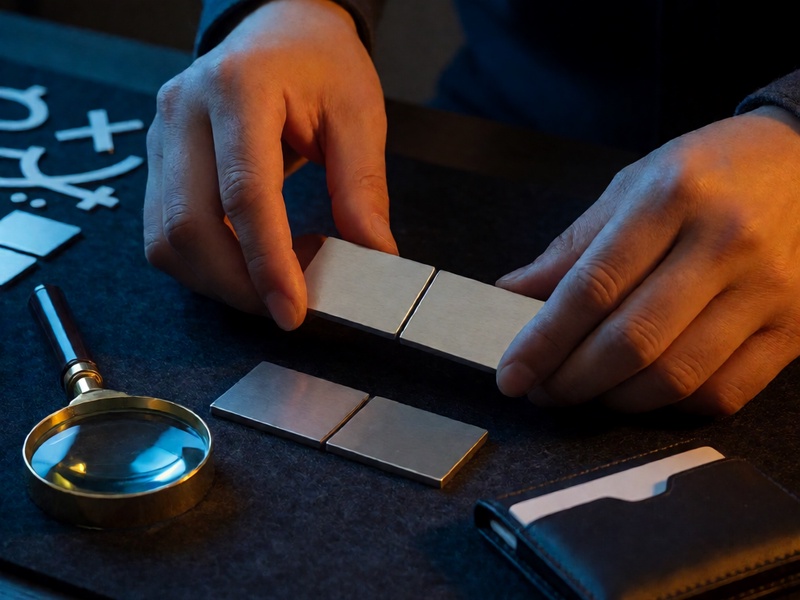
This example is intentionally slow and should only be used for a reduced search space. For 12 fully shuffled words, you need an optimized tool, not a basic Python loop. Also remember that a valid checksum does not guarantee the right wallet. You must derive Bitcoin addresses and compare them to a known address from the original Armory wallet.
Repair Method 2: btcrecover for Partial and Disordered Mnemonics
btcrecover is a well-known open-source recovery tool for Bitcoin wallets, including BIP39 mnemonic phrases. It supports token-based recovery, typo tolerance, and partial seed phrases. You can define which word slots are known, which are uncertain, and which words may be swapped. It is not a magic button for a fully shuffled 24-word phrase, but it is excellent for cases like:
- One or two words in the wrong position.
- A missing word that you can infer from the checksum.
- A known address that can be used as a verification oracle.
- A BIP39 passphrase that may also be partially known.
Run btcrecover only on an offline machine. Create a wallet file or address list from the original Armory wallet if possible. The more known addresses you have, the faster and more reliable the search becomes. If your Armory backup is legacy and not BIP39, btcrecover may not support it directly. In that case, use Armory's own recovery tools or a specialist.
Repair Method 3: Address Verification and Derivation Paths
Checksum validation is only the first filter. The real proof is an address match. After you find a BIP39-valid phrase, derive the first few Bitcoin addresses using the same derivation path that Armory used. For BIP39-based Bitcoin wallets, common paths include:
- BIP44: m/44'/0'/0'/0/0
- BIP49: m/49'/0'/0'/0/0 for nested SegWit
- BIP84: m/84'/0'/0'/0/0 for native SegWit
- BIP32 legacy: m/0/0 or another Armory-specific path
If your Armory wallet is a legacy deterministic wallet, the derivation may not follow BIP44. You need to reproduce Armory's root key logic. This is where a tool like the original Armory application, offline, can be invaluable. Import the candidate seed or paper backup, then check whether the generated addresses match your known receiving addresses. Never broadcast a transaction from a questionable wallet until you are certain.
Repair Method 4: Armory Legacy Paper Backup Recovery
Older Armory paper backups may not be BIP39 at all. They may encode a root key or chain code using Armory's own wordlist. In that case, BIP39 checksum scripts will reject every permutation, and you might wrongly conclude the words are invalid. Instead:
- Confirm the exact Armory version that created the wallet.
- Use the original Armory client's Restore from Paper Backup feature on an offline machine.
- Check whether the backup is a root key, a fragmented backup, or a BIP39 import.
- Use Armory's recovery documentation or community tools for the legacy wordlist.
- If the value is high, consider a professional recovery service that specializes in legacy Bitcoin wallets.
Do not share the shuffled words with a service until you have verified its reputation, escrow policy, and security practices. A legitimate service will never ask for the full seed in plain text through email or chat.
When to Stop Brute-Forcing and Seek Help
Brute force has limits. If you have 24 fully shuffled BIP39 words with no known address, no known position, and no passphrase clue, the search space is beyond any practical attack. If you have a legacy Armory backup with an unknown format, guessing may damage the backup or waste time. Stop and reassess if:
- You do not know whether the phrase is BIP39 or Armory legacy.
- You have no known receiving address or extended public key.
- The words contain duplicates or spelling variations you cannot resolve.
- The wallet holds significant value and you cannot risk exposure.
At that point, a structured recovery plan is safer than random permutations. The Crypto Wallet Recovery Guide at / offers step-by-step tutorials for BIP39, BIP32, MetaMask, Electrum, Ledger, and hardware wallet backups, including offline dictionary attacks and seed phrase reconstruction.
Prevent Future Out-of-Order Seed Phrase Problems
Once you recover the wallet, fix the backup process immediately. Permanent loss is preventable with a few disciplined habits:
- Number every word on your metal or paper backup.
- Store two or more backups in separate secure locations.
- Verify each backup by restoring it on an offline device before you need it.
- Use a passphrase only if you can back it up separately and reliably.
- Avoid handwritten copies without position numbers, especially for 24-word phrases.
- Do not photograph or cloud-sync seed phrases.
- Test small recovery drills with a dummy wallet to practice the workflow.
If you use Armory, confirm whether your wallet is legacy or BIP39-compatible. Store a note with the wallet version, derivation path, and backup type, but never store that note with the seed phrase itself. That single piece of metadata can turn an impossible recovery into a manageable one.
Final Thoughts
Armory mnemonic words out of order repair is a race against entropy, but it is not always hopeless. Start by identifying the backup format. Then work offline, test small swaps first, use checksum filtering, and verify every candidate against a known address. For BIP39 phrases, btcrecover and optimized scripts can recover partial ordering mistakes. For legacy Armory paper backups, use Armory-specific tools and avoid BIP39 assumptions. If the phrase is fully shuffled with no constraints, professional help may be the only safe option.
Your seed phrase is the wallet. Treat every recovery attempt as a security operation. Keep it offline, keep it private, and once the correct order is found, move your funds to a new wallet with a clean, verified backup. For more wallet-specific recovery guides, visit Crypto Wallet Recovery Guide at /.