Forgotten wallet passwords are stressful, especially when the wallet may still hold valuable keys. Bitcoin XT is a legacy Bitcoin implementation closely related to Bitcoin Core, and its wallet.dat files can be protected by a user-chosen passphrase. btcrecover is an open-source password recovery framework that can help automate candidate testing when you own the wallet or have explicit permission to recover it.
This article is an educational, high-level guide. It intentionally avoids unauthorized intrusion scenarios and focuses on legal, offline recovery practices. Exact command syntax and compatibility details should always be checked against the official btcrecover documentation for your wallet version.
Understanding Bitcoin XT Wallet Encryption
A Bitcoin XT wallet typically stores encrypted private keys in a wallet.dat file. The password is not a simple login secret; it is used to derive a key that unlocks the encrypted material. There is no built-in password reset button and no recovery backdoor. If the passphrase is lost, recovery generally depends on generating plausible candidates and testing them against the wallet.
Because Bitcoin XT is an older fork, not every modern tool will handle every wallet version identically. Before starting, confirm the wallet type, version, and encryption behavior. Work only with a copy of the wallet file, never the original, and keep a verified backup in a secure location.
What btcrecover Can and Cannot Do
btcrecover is designed for wallet password recovery, not for magic decryption. It can help organize recovery attempts using tokenlists, masks, typo patterns, incremental searches, and performance tuning options. This makes it useful when you remember fragments of a password, common substitutions, or likely typing mistakes.
It cannot guarantee success. If the password is long, random, and completely unknown, the search space may be impractical. It also cannot repair a damaged wallet file or bypass strong encryption without a correct password. Compatibility with Bitcoin XT depends on the wallet format and the tool version, so always verify support before investing time in a recovery run.
Safety, Ownership, and Isolation
Password recovery should be performed only on wallets you own or are explicitly authorized to access. Unauthorized access to someone else's wallet is illegal and unethical. If ownership is unclear, stop and seek legal advice.
Before running any recovery attempt, take these precautions:
- Make multiple copies of wallet.dat and store them securely.
- Keep the original wallet file untouched.
- Use an offline or air-gapped machine when possible.
- Download btcrecover only from its official repository and verify checksums.
- Do not upload wallet files or passwords to cloud services.
- Keep notes and logs secure because they may reveal password fragments.
A Safe Recovery Workflow

- Identify the wallet type and version. Confirm that the file belongs to Bitcoin XT and note any available metadata.
- Preserve the evidence. Create a working copy, record its hash, and keep a separate backup.
- Prepare an isolated environment. Use a clean machine, the correct Python version, and the official btcrecover release.
- Build a realistic candidate model. Start with password fragments you genuinely remember, then add capitalization variants, leetspeak, dates, keyboard patterns, and likely typos.
- Run targeted searches first. Use tokenlists and narrow masks before attempting broad brute-force searches.
- Monitor progress and adjust. If the estimated search space is unrealistic, refine the candidate model rather than wasting time.
- Secure the result. If the password is recovered, store it safely, restore access on a clean system, and consider moving funds to a new wallet.
btcrecover command flags and wallet-specific options can change over time. Use the official documentation for exact syntax, and test only against copies of your own wallet.
Practical Candidate Strategies
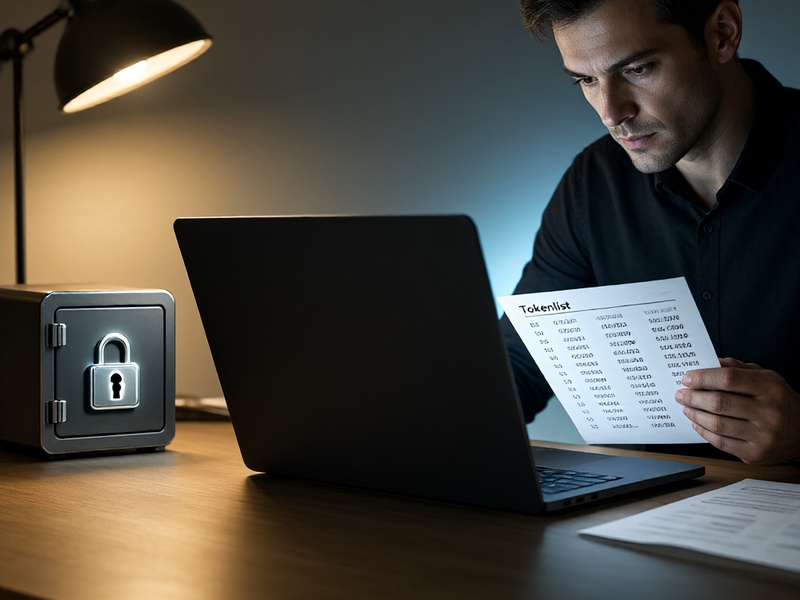
A tokenlist is often more effective than a pure brute-force attack. It lets you describe password fragments, common substitutions, and variations. For example, if you remember part of a phrase but not the punctuation or capitalization, a tokenlist can test reasonable combinations without exploring every possible character.
Masks are useful when you know the password length or structure. Typo patterns can help when you suspect a mistyped character. Incremental searches can be helpful for shorter or partially known passwords. However, adding too many speculative rules can explode the search space, so keep the model focused.

Common Mistakes to Avoid
- Running recovery tools against the only copy of a wallet.
- Assuming every Bitcoin fork uses identical wallet behavior.
- Starting with a full brute-force search instead of using known fragments.
- Ignoring password variations such as case, spacing, and leetspeak.
- Downloading tools from unofficial sources.
- Leaving sensitive password fragments in shell history or unencrypted logs.
- Expecting hardware acceleration to solve every wallet format.
Ethical and Legal Boundaries
Bitcoin wallet password recovery is legitimate when it is performed by the owner or an authorized party. It becomes unlawful when used to access wallets without permission. This guide is intended for education and authorized recovery only. If a wallet contains significant value or the file may be corrupted, consider consulting a reputable professional recovery service.
Final Thoughts
btcrecover can be a useful part of an authorized Bitcoin XT wallet recovery plan, especially when you have partial password knowledge. Success depends on careful preparation, realistic candidate modeling, secure backups, and patience. Keep the process offline, use official tools, document your steps, and never attempt recovery on a wallet you do not own or have clear permission to access.