Losing access to a BNB wallet can feel urgent, but the safest recovery path is rarely the fastest one. If you still remember part of a BNB mnemonic, have a damaged backup, or need to verify a 12/24-word seed phrase, an offline and methodical approach can reduce risk without exposing sensitive words online. This guide follows the safety-first principles used in our Crypto Wallet Recovery Guide at / and focuses on legitimate recovery of wallets you own or are authorized to recover.
What a BNB mnemonic actually is
A BNB wallet mnemonic is usually a BIP39 seed phrase made of 12 or 24 words. BIP39 converts entropy plus a checksum into human-readable words. BIP32 then derives private keys and addresses from that seed, often using BIP44-style derivation paths.
For BNB Smart Chain, many wallets are EVM-compatible and commonly use Ethereum-style paths such as m/44'/60'/0'/0/0. BNB Beacon Chain and some older wallets may use different paths. This matters because the same mnemonic can generate different addresses across wallets and paths. If a recovered phrase does not immediately show your expected address, do not assume it is wrong until you have checked the correct chain, wallet type, derivation path, and any BIP39 passphrase.
Only attempt recovery on wallets you own or have explicit permission to recover. Never use these methods against another person's wallet.
Safety rules before you start
- Work in an offline or air-gapped environment. Disable Wi-Fi and Bluetooth, unplug network cables, and consider using a clean live USB system.
- Never enter a full seed phrase into a website, cloud note, chat, email, AI tool, or support form. No legitimate recovery service needs your complete mnemonic online.
- Download tools on a separate online machine, verify checksums and signatures, then transfer them to the offline machine using a clean USB drive.
- Use a dedicated device with no screen recording, remote access, cameras, or unnecessary browser extensions.
- Keep paper or metal backups. Avoid photos, cloud sync, and screenshots of seed words.
- Distinguish between a wallet password, a PIN, and a BIP39 passphrase. A seed phrase can restore wallet access, but it does not recover every app-level password in every context.

Step 1: Build a basic inventory before guessing
Start with facts rather than random attempts. List the wallet apps you used, such as Trust Wallet, MetaMask, hardware wallets, or other EVM-compatible wallets. Record the chain involved: BNB Smart Chain, BNB Beacon Chain, Ethereum, or another network. Note whether you used a BIP39 passphrase, a hardware wallet PIN, or an app password.
Check the word count. BIP39 phrases are commonly 12 or 24 words, but some backups include extra labels or passphrase hints that are not part of the mnemonic. Confirm whether any words are known for certain and which positions are uncertain. If you have a known public receiving address or previous transaction history, keep that public information available for offline comparison. Public addresses are not secret; seed words are.
Step 2: Prepare an air-gapped recovery station
Use a clean offline computer or live USB environment. Verify the recovery tool on a separate online machine first, then move it offline. Reputable open-source BIP39 and BIP32 tools can help validate checksums and derive public addresses, but only run trusted local copies.
During recovery, do not connect to the internet. Do not paste seed words into browser-based tools unless you have verified the file and are running it fully offline. If you use a hardware wallet, enter recovery words directly on the device whenever possible, not on the computer keyboard.
Step 3: Reconstruct from partial memory
Write down every remembered word with its position. Mark uncertain words clearly. Use the official BIP39 English wordlist if your phrase is in English. Many BIP39 words are uniquely identifiable by their first four letters, which can help narrow candidates when you remember a word only partially.
If only one to three words are missing, an offline script can enumerate candidates from the BIP39 wordlist, apply checksum validation, derive public addresses, and compare them with your known address. The checksum quickly filters invalid combinations. For 12-word phrases, checksum validation removes many wrong guesses; for 24-word phrases, the search space is larger, so positional constraints and known words are important.
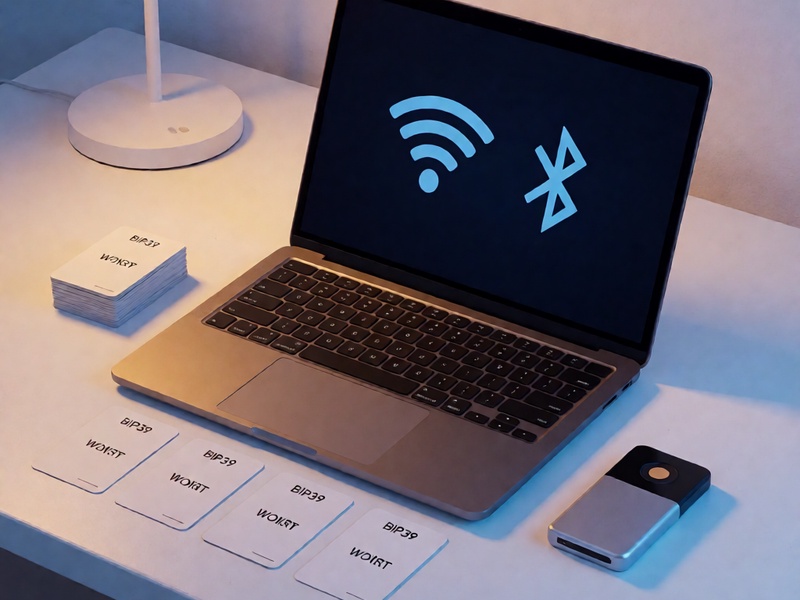
If the order of several words is uncertain, the number of possible permutations can grow quickly. Limit the search using known positions, likely word order, checksum rules, and the expected wallet derivation path. Always test candidates offline against public addresses rather than repeatedly trying guesses in a live wallet.
Step 4: Use offline dictionary attacks correctly
In mnemonic recovery, an offline dictionary attack should mean a constrained search against the BIP39 wordlist and checksum rules, not an attempt to access remote accounts. A typical offline workflow is: generate candidate phrases, compute the BIP39 seed using PBKDF2-HMAC-SHA512, derive keys with BIP32, and compare resulting public addresses with a known address.
For small search spaces, a well-written offline script may be enough. For larger searches, GPU acceleration can help in some wallet password scenarios. Tools such as btcrecover, HashCat, and Pywallet are useful in specific recovery contexts, especially legacy Bitcoin wallet files and password-protected wallet data, but they are not universal BNB mnemonic solvers. Understand each tool's scope before using it. For broader cross-chain recovery procedures, see our Crypto Wallet Recovery Guide at /.
Step 5: Match the right wallet, chain, and derivation path
A valid mnemonic can still appear to fail if you check the wrong address type. MetaMask, Trust Wallet, MyEtherWallet, and other EVM-compatible wallets may use different account indexes or derivation paths. Hardware wallets such as Ledger can also use multiple paths. Bitcoin wallets such as Electrum use different derivation standards, so do not expect a BNB recovery path to behave like an Electrum wallet.
Test the candidate phrase against the correct chain and likely derivation paths. If you used a BIP39 passphrase, include it exactly; passphrases are case-sensitive and may include spaces. Once you find the correct public address, verify it carefully before moving funds. If the seed phrase may have been exposed, create a new wallet with a new seed phrase and transfer assets only after confirming the destination address.
Step 6: Recover hardware and cold wallet backups safely
For hardware wallets, restore the mnemonic on the device itself when possible. If the device is damaged, the seed phrase is usually the recovery path, but the recovery must still happen offline and without exposing words to a computer screen if avoidable. For cold storage, use durable metal backups, store copies in separate secure locations, and test the backup before relying on it.
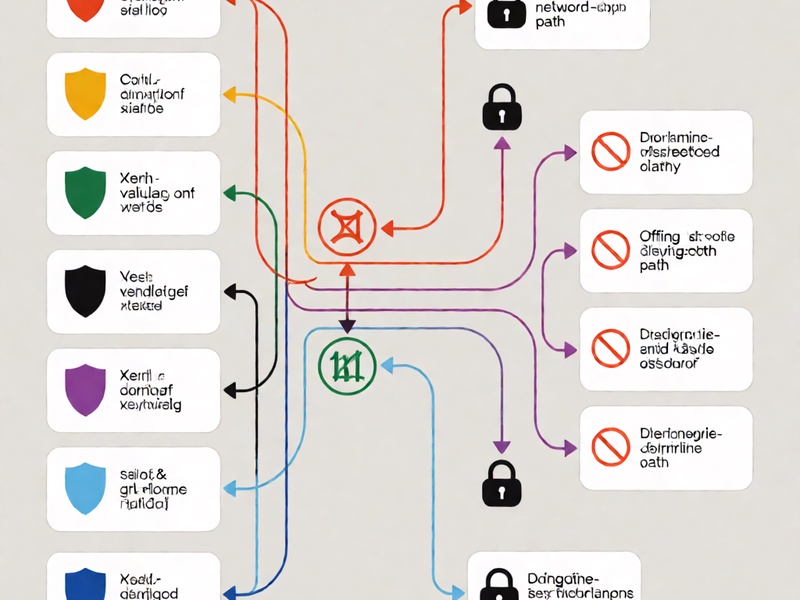
Avoid simple seed splitting unless you fully understand the tradeoff. A split with no redundancy can cause permanent loss. Multisignature setups or well-understood secret-sharing schemes may be safer for advanced users, but they require careful planning and testing.
Common mistakes to avoid
- Sharing the seed phrase with a recovery service, support agent, or online tool.
- Confusing a wallet password with the mnemonic or BIP39 passphrase.
- Ignoring derivation paths and testing only one wallet configuration.
- Overwriting a wallet before confirming that the backup is valid.
- Storing seed words in cloud notes, email drafts, photos, or screenshots.
- Using random browser extensions or unverified scripts.
- Attempting recovery on the live device while the wallet still holds significant funds.
Prevention beats emergency recovery
Create multiple backups, store them in separate locations, and use fireproof or waterproof materials for long-term storage. Label wallets and record the chain, wallet type, derivation path, and passphrase hints separately from the seed phrase. Consider multisignature or secret-sharing approaches only if you understand how to recover them. Run periodic offline restore drills so you know your backup works before you need it.
Summary
Offline BNB mnemonic recovery is possible when you work carefully. Start with inventory and secrecy, prepare an air-gapped station, reconstruct partial phrases with the BIP39 wordlist and checksum, and validate candidates against public addresses using the correct BIP32 derivation path. Use tools such as btcrecover, HashCat, and Pywallet only within their proper scope. For a wider cross-chain approach, consult the Crypto Wallet Recovery Guide at /. Recover only your own wallets, and if you are unsure at any step, stop rather than exposing your seed phrase.