BitKey, the widely used open-source cold storage crypto wallet, is designed to protect user funds with military-grade AES-256 encryption and memory-hard key derivation functions (KDF) that make offline theft extremely difficult. For users who have lost access to their own wallet passwords, however, legitimate recovery efforts depend entirely on matching hardware performance to the mathematical demands of BitKey’s encryption pipeline. Many new recovery operators rely on generic 'build a fast GPU rig' advice, but BitKey’s specific file structure, KDF parameter sets, and single-threaded file parsing logic create unique hardware requirements that generic gaming or mining rigs often fail to meet efficiently.
Core Hardware Thresholds For Baseline BitKey Cracking Performance
BitKey’s modern wallet versions (0.9 and above) use the Argon2id KDF, a memory-hard algorithm that is far less dependent on raw GPU core speed than older SHA-256-based cracking tasks. To hit usable throughput for recovery, your setup must meet minimum performance thresholds across every core component:
- GPU: The workhorse of BitKey cracking, with a strict requirement for at least 8GB of VRAM per card to run parallel hash attempts. Cards with less than 6GB of VRAM typically cap out at under 100 hashes per second (h/s) for modern BitKey wallets, compared to 1200+ h/s on high-capacity 24GB models.
- CPU: Unlike distributed GPU workloads, BitKey’s initial wallet parsing stage runs entirely on a single CPU thread. A processor with a PassMark single-core score below 2200 will create a hard bottleneck, wasting 30% or more of your GPU’s available compute time waiting for wallet file decryption.
- System RAM: A minimum of 32GB of non-ECC RAM (or 64GB for multi-GPU setups) is required to cache wallet hash tables and password candidate lists, avoiding slow disk paging that can stall cracking runs.
- Storage: A 1TB+ NVMe SSD with sequential read speeds above 3000MB/s is non-negotiable. Traditional hard disk drives cannot pull 100,000+ password candidates per second fast enough to keep GPUs fully utilized.
Across all use cases, three standard setup tiers deliver consistent performance:

- Entry-level hobbyist setup: 1x RTX 3060 8GB, 32GB RAM, 1TB NVMe, Ryzen 5 5600, ideal for older BitKey wallets with under 150,000 KDF iterations
- Mid-tier recommended setup: 2x RTX 4070 Ti Super 16GB, 64GB RAM, 2TB NVMe, Ryzen 5 7600X, optimized for modern BitKey wallets with 1,000,000+ KDF iterations
- High-end time-sensitive setup: 8x RTX 4090 24GB, 256GB ECC RAM, 4TB RAID 0 NVMe, Threadripper 7960X, built for recovering high-value wallets with extremely strong KDF parameters
Hashcat benchmark data shows that a balanced mid-tier setup often delivers faster sustained BitKey cracking throughput than an overpriced, imbalanced high-end rig with mismatched components.
Hardware Bottlenecks That Erase Expected Cracking Performance Gains
Even users who hit the baseline hardware thresholds often see far lower throughput than advertised, due to three common, easily overlooked bottlenecks specific to BitKey’s memory-hard encryption model:
- VRAM underprovisioning: BitKey’s default Argon2id configuration allocates roughly 1GB of memory per parallel hash attempt. A 4GB VRAM card can only run 3 parallel attempts at a time, while a 24GB card can run 23 attempts — but if VRAM is overloaded, the algorithm spills data to system RAM, cutting throughput by 70% or more even on top-tier GPUs.
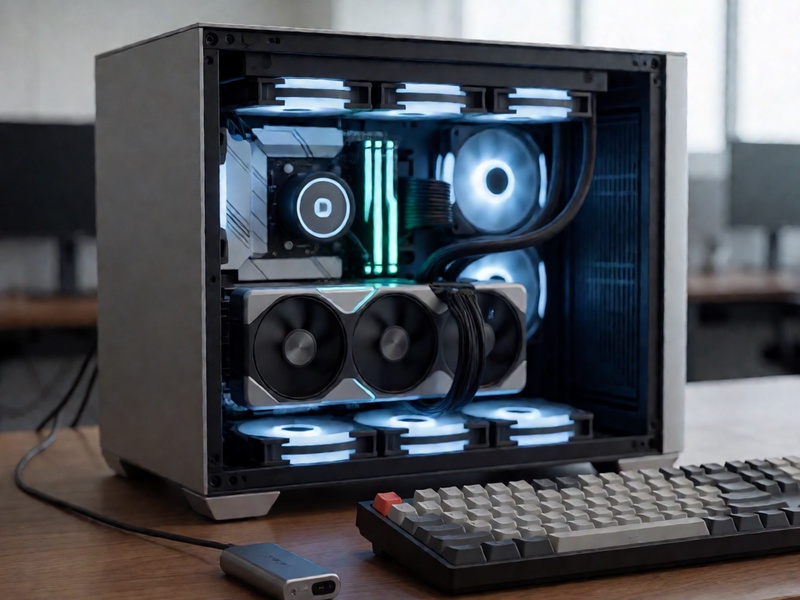
- Low memory bandwidth: Raw GPU core speed has minimal impact on BitKey cracking performance compared to VRAM memory bandwidth. For example, a mining-modified RTX 3060 with 150GB/s of memory bandwidth is 40% slower than a gaming RTX 3090 with 936GB/s of bandwidth, despite similar core clock speeds.
- Insufficient PSU headroom: GPUs running full-time cracking loads draw 100% of their rated TDP for hours on end. A PSU that is sized exactly to your component’s total power draw will trigger voltage throttling, reducing sustained throughput by 25-30% and risking hardware damage over time. Industry best practice is to use an 80+ Gold rated PSU with 30% more capacity than your total system power requirement.
Benchmarking Your Hardware For Real-World BitKey Cracking Speed
Generic benchmark numbers shared online rarely translate to real BitKey cracking performance, because every wallet uses a unique set of KDF parameters. Before launching a full recovery run, operators should complete a 5-minute benchmark using Hashcat’s dedicated BitKey module (mode 28900), pulling exact KDF parameters directly from their own wallet file rather than using generic test values.
For reference, the table below shows real-world throughput for common setups, measured against a modern BitKey wallet with 1,000,000 Argon2id iterations:
| Hardware Setup | Hash Rate (h/s) | Time to Test a 10M-Password Dictionary |
| --- | --- | --- |
| 1x RTX 3060 8GB | 120 | ~23 hours |
| 1x RTX 4090 24GB | 1450 | ~2 hours |
| 4x RTX 4090 24GB | 5800 | ~29 minutes |
To maximize benchmark accuracy: disable all background applications, set GPU memory clocks to their maximum stable value (rather than overclocking GPU cores, which deliver minimal gains for memory-hard tasks), and monitor GPU temperatures to avoid thermal throttling — cards running above 85°C typically drop memory clock speeds enough to cut throughput by 20%.
Key Takeaways
Effective BitKey password recovery is never about buying the most expensive hardware on the market — it is about matching component performance to the exact demands of BitKey’s memory-hard encryption pipeline. Overspending on extra GPU cores or high-end multi-threaded CPUs will not deliver faster recovery if your setup lacks sufficient VRAM, memory bandwidth, or single-core CPU performance. For most legitimate users, targeted upgrades to memory capacity and bandwidth will cut recovery timelines from months to hours, without requiring a five-figure enterprise hardware budget.
Note: All guidance shared in this article is intended exclusively for recovering access to BitKey wallets you legally own. Unauthorized cracking of third-party wallet files violates global cybersecurity laws and ethical use guidelines for recovery tools.