Introduction
Xverse is an open-source password recovery and security auditing tool designed for ethical hackers, penetration testers, and system administrators. This tutorial provides a detailed walkthrough of Xverse开源工具密码破解详细教程 (Xverse open-source password cracking detailed tutorial), focusing on legitimate use cases such as authorized security assessments, CTF competitions, and recovering forgotten passwords from your own systems. Always ensure you have explicit permission before testing any system or account.
Legal and Ethical Considerations
Password cracking must only be performed on systems you own or have written authorization to test. Unauthorized access is illegal and unethical. Xverse is intended for security research, password recovery, and educational purposes. Use it responsibly and comply with all applicable laws.
What is Xverse?
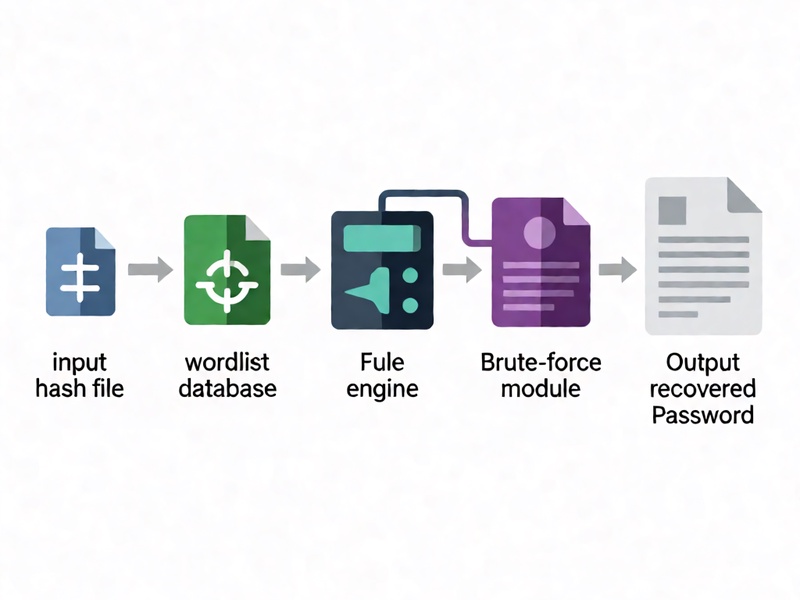
Xverse is a modular, command-line tool written in Python that supports multiple attack modes:
- Dictionary attacks
- Brute-force attacks
- Rule-based mutations
- Hybrid attacks
- Hash cracking (MD5, SHA1, SHA256, bcrypt, etc.)
It is lightweight, extensible, and works on Linux, macOS, and Windows (via WSL).
Installation
- Clone the repository from GitHub:
git clone https://github.com/xverse-tool/xverse.git cd xverse - Install dependencies:
pip install -r requirements.txt - Verify installation:
python xverse.py --help
Basic Usage
Cracking a Hash File

Suppose you have a file hashes.txt containing SHA256 hashes and a wordlist rockyou.txt:
python xverse.py -m sha256 -i hashes.txt -w rockyou.txt --threads 8
Brute-Force Attack
For a 4-digit PIN hash:
python xverse.py -m md5 -i pin.hash --brute-force --charset digits --min-length 4 --max-length 4
Rule-Based Attack
Apply common password mutations (e.g., appending years, capitalizing first letter):
python xverse.py -m bcrypt -i hashes.txt -w base.txt --rules best64.rule
Advanced Techniques
- Hybrid Attack: Combine dictionary and mask (e.g.,
password2024). - Session Management: Save and resume progress with
--session name. - GPU Acceleration: Xverse supports OpenCL for faster cracking (requires compatible GPU).
- Custom Plugins: Extend functionality by writing Python modules in the
plugins/directory.
Best Practices
- Use strong, unique passwords and password managers.
- Enable multi-factor authentication.
- Regularly audit your own systems with Xverse to identify weak passwords.
- Never crack passwords on systems without explicit permission.
Conclusion
Xverse is a powerful open-source tool for ethical password cracking and security auditing. This tutorial covered installation, basic and advanced usage, and ethical guidelines. By following the Xverse开源工具密码破解详细教程, you can enhance your security testing skills while respecting legal boundaries.
Disclaimer: This content is for educational purposes only. The author is not responsible for any misuse.