Introduction
Xverse password cracking, when performed in an authorized wallet recovery or security audit, is a hardware-bound problem. The hardware performance requirements are determined less by a single Xverse cracker and more by the wallet's encryption format, the key-derivation function, the size of the candidate password space, and the operational limits of CPU, GPU, memory, power, and cooling. This article examines those requirements from a benchmarking and capacity-planning perspective.
Important: Only attempt password recovery on wallets you own or have explicit written authorization to test. Unauthorized access is illegal and unethical.
What Drives Hardware Demand?
1. Wallet Encryption and KDF
Xverse and similar Bitcoin wallets often protect local secrets with password-based encryption. Modern designs may use PBKDF2, scrypt, or Argon2-style KDFs. Memory-hard KDFs deliberately increase RAM and VRAM requirements and reduce the advantage of simple parallel hash crunching.
2. Candidate Space and Search Strategy
Hardware needs scale with the number of password candidates. A short, low-entropy password requires far less compute than a long, random passphrase. In authorized audits, the search strategy must be constrained by legal scope and time budget, which directly affects CPU and GPU sizing.
3. Throughput Target
The key metric is not raw clock speed but effective candidate tests per second. You must benchmark the exact wallet format and KDF parameters. A system that is fast on one KDF may be slow on another.
Core Hardware Performance Requirements
CPU
- High core count for parallel candidate generation and memory-hard KDF work.
- Strong single-thread performance for orchestration and non-GPU tasks.
- AVX-512 or comparable SIMD support can improve some cryptographic workloads.
- Sufficient cache to reduce memory stalls where possible.

GPU
- Large VRAM: 12 GB is an entry point; 16-24 GB or more is preferable for memory-hard KDFs and multi-instance workloads.
- High memory bandwidth: often the real bottleneck for scrypt or Argon2-style functions.
- Many compute units: useful for parallel candidate testing, but only if the KDF fits the memory model.
- Multi-GPU scaling: requires adequate PCIe lanes, power, and cooling; scaling is rarely linear.
Memory and Storage
- System RAM: 32-64 GB minimum for basic authorized recovery; 128 GB+ for large wordlists, rule engines, and memory-hard work.
- NVMe SSD: fast loading of wordlists, checkpoints, logs, and result databases.
- ECC memory: beneficial for long-running forensic jobs where silent corruption is unacceptable.
Power, Cooling, and Reliability
- PSU capacity must cover sustained GPU power spikes, not just average TDP.
- Cooling must prevent thermal throttling; sustained performance matters more than peak burst speed.
- UPS and monitoring protect long jobs from power loss and overheating.
- Cost per candidate tested and joules per candidate are practical planning metrics.
Realistic Hardware Tiers
Entry-Level Audit Workstation
- 8-16 core CPU
- 32-64 GB RAM
- 1 mid-range GPU with 8-12 GB VRAM
- 1 TB NVMe SSD
- 750-1000 W PSU
Suitable for small, authorized recovery jobs and method validation.
Professional Recovery Rig
- 24-64 core CPU
- 128 GB+ RAM
- 2-4 high-end GPUs with 16-24 GB VRAM each
- 2-4 TB NVMe SSD
- 1600 W+ PSU, high-airflow cooling
Suitable for larger candidate spaces and memory-hard KDF benchmarking.
Advanced Cluster
- Multiple nodes with dense GPU configurations
- 256 GB+ RAM per node
- 10 GbE or faster interconnect
- Redundant power and cooling
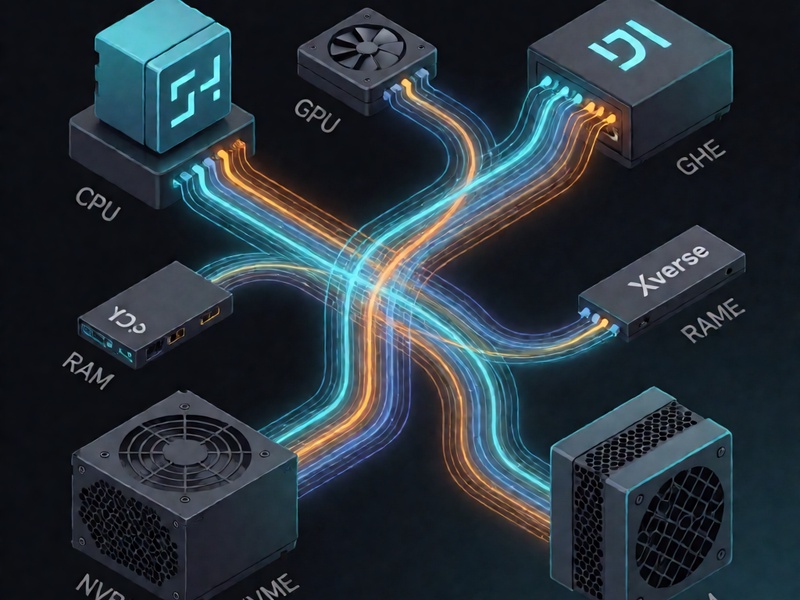
- Centralized job orchestration and monitoring
Needed when candidate spaces are very large or when several wallet formats must be tested in parallel.
Bottlenecks to Watch
- Memory bandwidth and VRAM capacity for memory-hard KDFs.
- Thermal throttling under sustained load.
- PCIe bottlenecks in multi-GPU systems.
- Inefficient candidate generation that starves the GPU.
- Power delivery limits and breaker capacity.
- Storage I/O when wordlists and logs become large.
Benchmarking Checklist
- Identify the exact Xverse wallet format and KDF parameters in the authorized scope.
- Measure candidates per second, not theoretical peak FLOPS.
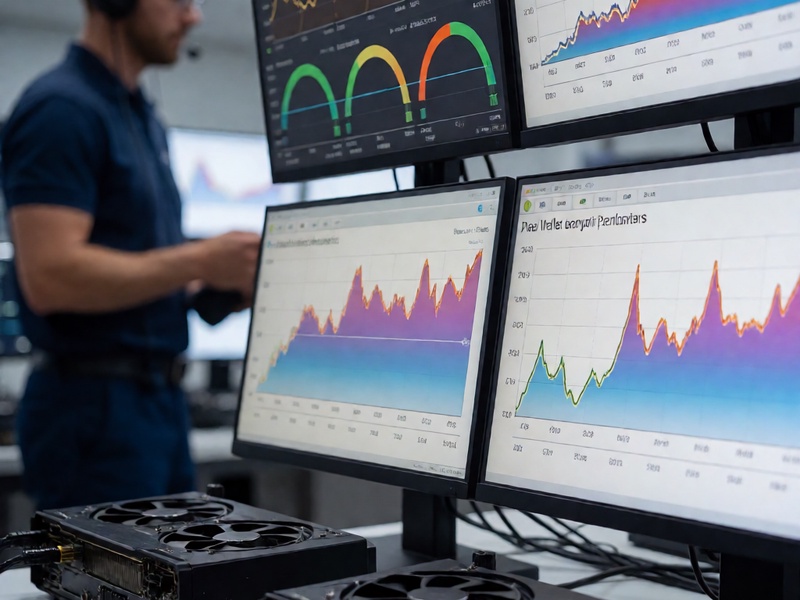
- Record power draw, temperature, and sustained clock speeds.
- Test single-GPU vs. multi-GPU scaling.
- Calculate cost per million candidates and energy per million candidates.
- Document reproducibility for forensic reporting.
Conclusion
Hardware performance requirements for Xverse password cracking are workload-specific. The best configuration depends on the wallet's KDF, the candidate space, the legal scope, and the required throughput. A disciplined approach - benchmark first, scale second, and monitor power and cooling throughout - is more valuable than simply buying the fastest GPU. In authorized security work, the goal is not maximum force but defensible, efficient, and compliant recovery.