Self-custody gives you control, but it also makes you the last line of defense. A single seed phrase stored in one place is a single point of failure. This guide outlines layered backup and recovery strategies for Ethereum wallets.
Why one backup is not enough
Backups fail for ordinary reasons: fire, flood, theft, hardware death, lost paper, forgotten passphrases, and human error. They also fail for crypto-specific reasons: unclear derivation paths, missing BIP39 passphrases, inaccessible multisig signers, and smart contract wallet guardians who cannot coordinate. A serious backup plan assumes that any one copy, device, location, or person may become unavailable.
Use the 3-2-1 principle as a baseline: three copies, two different media types, and at least one copy offsite. For higher-value wallets, add protocol-level redundancy such as multisig, social recovery, or MPC.
What to back up
- The seed phrase, written exactly and verified word by word.
- The BIP39 passphrase, if you use one. This is not recoverable from the seed phrase alone.
- The derivation path and account index used by your wallet.
- Private keys or keystore JSON files for imported accounts.
- Hardware wallet model, firmware version, and device PIN reminder in a secure place.
- Multisig configuration, signer addresses, threshold, chain, and Safe or contract address.
- Smart contract wallet guardians, recovery contract address, and recovery process.
- Clear recovery instructions for a trusted person or future executor.
Layer 1: Create a reliable primary backup
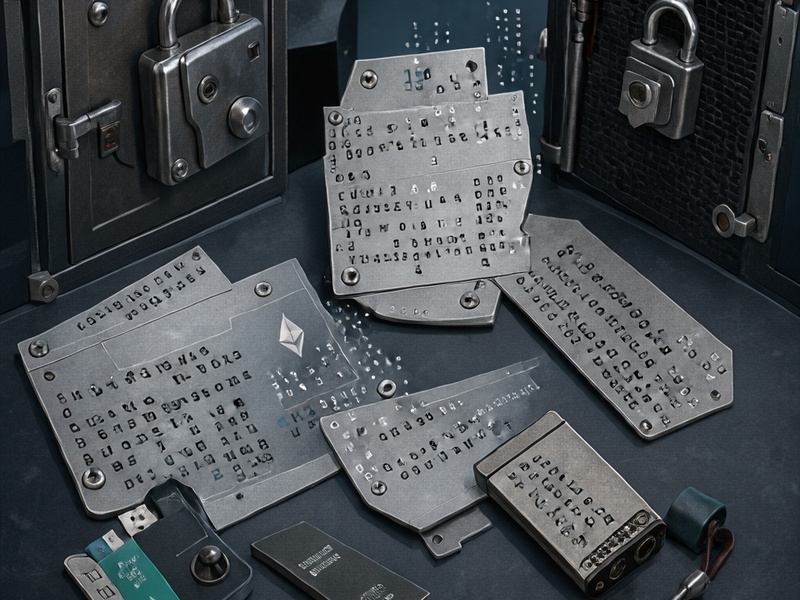
Start with one high-quality backup of the seed phrase. Write it by hand on acid-free paper, then verify every word against the wallet. For better durability, transfer it to a metal backup plate that resists fire and water. Do not photograph the seed phrase, type it into an internet-connected device, or store it in a plaintext note. If you use Shamir Secret Sharing, understand exactly how many shares are needed, where each share is stored, and how reconstruction works before you rely on it.
Layer 2: Add geographic and medium diversity
Keep copies in separate locations, such as a home safe, a bank safe deposit box, and a trusted family member or lawyer. Use different media: paper, metal, an encrypted USB drive, and a hardware wallet. Encrypt digital copies with a strong passphrase and keep them offline. Never store all shares or all copies with one person or one provider. Document what exists, where it is, and who can access it without exposing the secret itself.
Layer 3: Use protocol-level redundancy
Multisig wallets require multiple signers to approve transactions. Social recovery wallets use guardians to help restore access. MPC wallets split key material across devices or parties. These approaches reduce single-seed risk, but they add new responsibilities: signer coordination, guardian availability, contract addresses, and recovery testing. Treat configuration data as part of your backup.
A recovery strategy that actually works

A backup is only useful if it can be recovered under stress. Build a recovery kit with instructions, wallet addresses, derivation paths, and contact information. Test recovery before moving significant funds. Use a clean device and an offline environment when possible. Download wallet software only from official sources and verify firmware. Restore with a small test amount first, then confirm that addresses and balances match. Store the recovery kit separately from the backup secrets. Review the entire plan at least once a year.
Recovering different wallet types
- Seed phrase wallets: enter the seed into a hardware wallet or trusted software, then confirm the derivation path.
- Passphrase wallets: restore the seed, then enter the exact BIP39 passphrase. Case, spaces, and Unicode characters matter.
- Multisig wallets: gather the threshold number of signers, use the correct contract address and chain, and follow the documented transaction flow.
- Smart contract wallets: use guardian recovery or the recovery contract, and make sure gas is available.
- Hardware wallets: restore the seed to a new compatible device and verify the first receiving address.
Security during recovery
Recover in private, offline conditions when possible. Disable cameras and remote access tools. Never share the seed phrase with anyone who contacts you first. Verify every address on the hardware wallet screen. Avoid phishing sites, fake support agents, and browser extensions that request seed phrases. If a backup may have been exposed, move funds to a new wallet and rebuild the backup system immediately.
Inheritance and emergency access
Inheritance planning is part of recovery. Write instructions that explain where backups are, how to reconstruct access, and which wallets matter. Avoid placing a full seed phrase in a public will or probate document. Instead, use a sealed instruction package, a lawyer, a safe deposit box, or a multisig and social recovery setup with trusted guardians. Test the process with the people who may need to use it.

Maintenance checklist
- Inspect paper and metal backups for damage.
- Confirm that encrypted drives still work and passwords are available.
- Check that guardians and signers are reachable.
- Update wallet addresses, derivation paths, and contract details.
- Rehearse recovery with a small amount.
- Rotate backups if any device, location, or person is compromised.
Common mistakes
Storing one copy. Keeping the seed with the hardware wallet. Using a cloud photo or plaintext note. Forgetting to back up the BIP39 passphrase. Ignoring derivation paths. Relying on an exchange account as a backup. Never testing recovery. Assuming heirs will understand the setup without instructions.
Conclusion
Ethereum wallet multi-backup and recovery is not a one-time task. It is a layered system of media, locations, people, and tested procedures. Start with a strong primary backup, add geographic and medium diversity, consider multisig or social recovery for larger holdings, and rehearse recovery before you need it. The goal is simple: no single failure should be able to lock you out of your own assets.