When a self-custody wallet user loses access, searches for Jaxx seed recovery sometimes mention offline dictionary attacks. The phrase sounds like a magic shortcut, but it describes a narrow technical approach with serious limits and legal boundaries. This guide explains the concept at a high level, why standard mnemonic phrases resist brute force, and how lawful owners can approach recovery safely without exposing secrets or enabling unauthorized access.
What an offline dictionary attack actually means
An offline dictionary attack is a method of testing candidate secrets locally on hardware you control, rather than through an online service that can rate-limit attempts. The word dictionary refers to a candidate pool built from wordlists, known patterns, partial memories, or common transcription mistakes. It is not a guarantee of success.
For crypto wallets, the secret may be a seed phrase, also called a mnemonic. A standard seed phrase is designed to encode high entropy. If it was generated randomly and kept private, the search space is enormous. A dictionary attack becomes more plausible only when entropy is reduced, such as when someone remembers most words, has a partial backup, reused a weak custom passphrase, or made predictable transcription errors.
Key points:
- Offline does not mean safe. Malware, clipboard capture, cloud syncing, and untrusted recovery tools can still leak a seed.
- A dictionary is not a universal key. Candidate generation depends on specific, limited knowledge.
- Checksum validation helps filter candidates, but it does not make a high-entropy phrase easy to recover.
- Random 12 or 24 word mnemonics are impractical to brute force without a major loss of entropy.
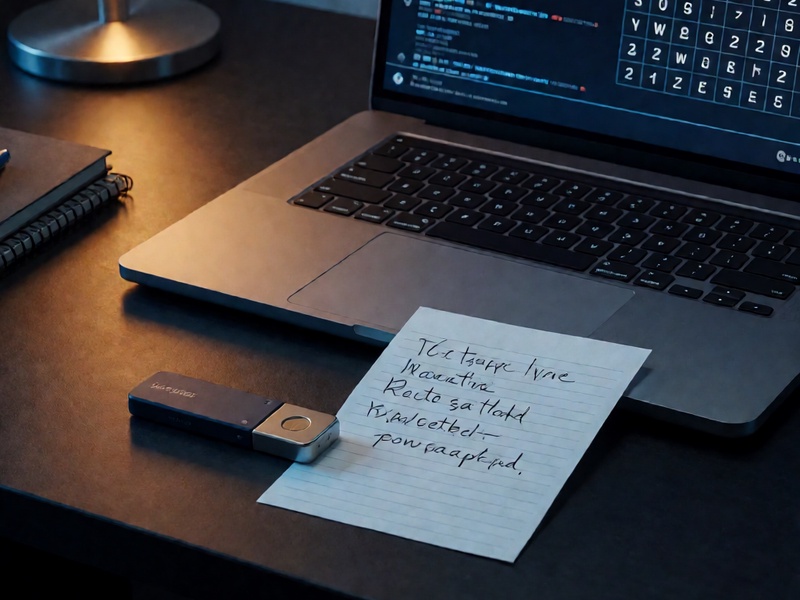
Why Jaxx seed recovery is not the same as password cracking
A seed phrase and a wallet password serve different roles. A password may protect an encrypted wallet file or app, while a mnemonic is the backup that can restore the wallet in compatible software. An offline dictionary or brute-force attack against a weak wallet password is a different problem from reconstructing a missing or damaged seed phrase.
Jaxx and Jaxx Liberty users should verify current official guidance because wallet products and support status can change. Recovery may involve an official restore flow, a compatible wallet, or professional assistance. Entering a seed phrase into an unknown website, support chat, or unofficial recovery tool is a common theft vector.
Legitimate recovery: a security-first checklist
If you are the lawful owner of a wallet and need recovery help, keep the process controlled and minimal.
- Confirm ownership and authorization. Only work on wallets you own or are explicitly authorized to recover.
- Use official restore flows first. Prefer vendor documentation, verified apps, and reputable compatible wallets.
- Protect the seed at all times. Never share the full phrase with a support agent, website, or cloud note.
- Check for simple transcription issues. Common problems include similar-looking words, swapped order, spacing, language selection, or a missed word.
- Use a trusted, preferably air-gapped device for any advanced recovery work. Avoid unknown scripts and browser extensions.
- Validate candidates carefully. Standard mnemonic checks can reject invalid combinations, but do not expose the seed while checking.

- Keep records minimal. Avoid screenshots, email drafts, and synced documents that contain seed material.
- Consider a professional recovery service for high-value situations, but demand written privacy and security policies first.
This article does not provide step-by-step instructions for unauthorized wallet access. Attempting to recover someone else's seed phrase or wallet is illegal and unethical.
Limitations and risks of offline dictionary attacks
Offline dictionary attacks are sometimes presented as a simple recovery solution, but the practical reality is more constrained.
- Full random mnemonics are infeasible to recover by brute force with ordinary hardware.
- Partial knowledge can still leave a huge search space, especially with multiple unknown words or uncertain ordering.
- Custom passphrases add complexity. A forgotten BIP39 passphrase can make recovery impossible even with a correct seed phrase.
- Recovery tools may be malicious. A tool that asks for a seed phrase or wallet file can steal funds.
- Operational mistakes matter. Copying, pasting, photographing, or uploading seed material creates lasting exposure.
- Legal risk is real. Unauthorized access to a wallet is a crime in many jurisdictions, regardless of the technical method.

Defensive practices for Jaxx and self-custody users
The best recovery strategy is prevention. Users should verify backups before funding a wallet and use layered security for significant amounts.
- Store the seed phrase offline in a durable, private format and in multiple secure locations.
- Avoid screenshots, cloud notes, email drafts, and password managers for seed storage.
- Use a hardware wallet for meaningful balances when possible.
- If using a custom passphrase, test the backup procedure before relying on it.
- Verify official apps and documentation, and avoid unofficial recovery sites.
- Practice a small-value restore test so you know the process works before an emergency.
- Treat any request for a seed phrase as hostile unless you are in a fully controlled offline recovery process.
Conclusion
Offline dictionary attacks are a specialized recovery concept, not a reliable shortcut for Jaxx seed recovery. Standard mnemonic phrases are designed to resist brute force, and the method only becomes relevant when entropy has been reduced by partial knowledge or predictable mistakes. Lawful owners should prioritize official restore processes, careful transcription checks, trusted hardware, and professional help when needed. Security, privacy, and clear ownership verification must come before any recovery attempt.