A Litecoin wallet mnemonic is designed to be a high-entropy backup, not a password to be guessed. Yet when users add weak passphrases, write down partial phrases, or invent their own word combinations, an offline dictionary attack can become relevant during authorized recovery. This article explains the concept at a high level and focuses on defensive lessons.
What 'offline' means in a recovery context
An offline dictionary attack does not need to query a live node or wallet service. Instead, it tests candidate secrets locally against a known target, such as a Litecoin address, public key, or encrypted wallet file. Because it avoids network rate limits and account lockouts, its practical limit is mostly the attacker's hardware, the size of the candidate space, and the cost of each derivation.
For Litecoin mnemonic recovery, the target might be a known receiving address. A recovery tool derives a candidate seed, derives Litecoin keys and addresses, and compares the result with the known address. If there is a match, the candidate is correct. This process can be legitimate when recovering your own wallet, but it is illegal and unethical when used against someone else's funds.
Why BIP39 mnemonics resist simple guessing
Most modern Litecoin wallets use BIP39-style mnemonic phrases. A standard 12-word phrase is selected from a 2048-word list and includes a checksum. If generated correctly, the phrase represents 128 bits of entropy; a 24-word phrase represents 256 bits. Brute-forcing that space is not a dictionary attack. It is an infeasible search.
The weak point is usually not the mnemonic standard itself. It is the human layer:
- A user-chosen BIP39 passphrase that is short, common, or predictable.
- A mnemonic that was manually invented instead of randomly generated.
- A backup that is missing several words, where the remaining words are known.
- Reused phrases, screenshots, cloud notes, or poorly secured digital copies.
- A wallet password or encryption passphrase based on a small dictionary.
In those cases, an offline dictionary attack may test plausible candidates from word lists, common passwords, or known variations. Success depends on whether the real secret appears in the candidate set.
Conceptual recovery workflow
A high-level, authorized recovery effort usually follows this pattern:
- Establish the wallet type and derivation method, such as BIP39, BIP44, or a wallet-specific scheme.
- Identify what is known: some mnemonic words, word positions, passphrase hints, an address, or an encrypted backup.
- Build a candidate list from lawful and owned information, not from stolen data.
- Derive each candidate seed and check it against a known Litecoin address or wallet file.
- Record only the result and protect any recovered seed material.
The difficult part is rarely writing a loop. It is understanding derivation paths, address types, checksums, and wallet formats, while keeping the process secure and legal.
Search-space math matters
Dictionary attacks are bounded by probability. A 4-word passphrase chosen from a list of 10,000 common passwords has 10,000^4 combinations, which may be too large for casual hardware but not for a determined attacker. A single-word passphrase from a 10,000-entry list is trivial. A 12-word random BIP39 mnemonic has 2048^12 possibilities, which is beyond brute force.
BIP39 seed derivation also adds cost per candidate through PBKDF2-HMAC-SHA512 with 2,048 iterations. That cost slows guessing, but it does not rescue a weak passphrase. Attackers may use GPUs or distributed systems, and they may optimize wallet-specific checks. The best defense is entropy, not complexity tricks.
Legal and ethical boundaries
Offline dictionary attacks against Litecoin mnemonics should only be used for wallets you own or are explicitly authorized to recover. Attempting to access another person's wallet, seed phrase, or encrypted backup can violate computer misuse, theft, and privacy laws. Recovery tools are not a license to bypass ownership. If you are helping someone else, get written authorization and avoid handling their seed unless absolutely necessary.
Defensive practices for Litecoin holders
- Generate the mnemonic with a reputable, audited wallet or hardware device.
- Use a strong, unique BIP39 passphrase if you need an extra layer, and back it up separately.
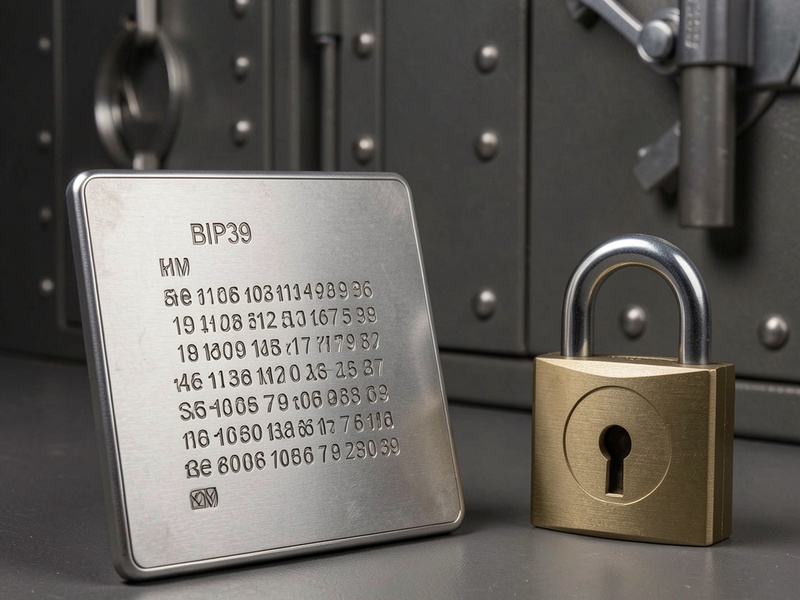
- Store backups offline on durable media, such as metal plates, and avoid photos or cloud notes.
- Never enter a seed phrase into a website, chat, email, or unknown app.
- Test your backup with a small transaction before relying on it.
- Consider multisignature setups for larger holdings.
- Keep recovery software on an air-gapped machine and verify checksums.
- Document wallet type, derivation path, and address format for your heirs or authorized recovery.
Conclusion
Offline dictionary attacks do not break strong Litecoin mnemonics. They exploit weak human choices: poor passphrases, partial backups, and insecure storage. Understanding the concept helps wallet owners see where the real risks are and how to reduce them. Whether you are recovering your own wallet or advising others, the goal should be lawful, ethical, and defensible recovery.