A valid recovery phrase can restore one signer and still leave a WaykiChain multisig wallet unusable. The underlying reason is that two different objects must be recovered: cryptographic key material and the authorization state of the multisig account.
A mnemonic normally contains the information needed to regenerate one signer's private key. It does not, by itself, identify the original multisig account, confirm which public keys are currently authorized, record the signing threshold, or preserve pending transactions. Treating a recovery phrase as a complete multisig backup is therefore a common and potentially expensive mistake.
This guide explains the recovery model used by multisig wallets, identifies the most frequent failure points, and provides a security-first procedure for reconnecting available signers to the correct WaykiChain account.
Implementation note: WaykiChain multisig features may be exposed through different wallet clients and account-contract versions. Confirm the exact recovery behavior, supported derivation paths, and signer-management rules against the official documentation and wallet version used to create the account.
The Core Problem: A Mnemonic Is Not a Multisig Backup
WaykiChain supports account-style smart contracts, and multisig wallets built on this model separate private signing keys from the rules governing collective authorization. A simplified recovery flow looks like this:
Mnemonic -> BIP-39 seed -> derivation path -> private key -> signer address

Multisig account address + signing threshold + authorized signer set + pending operations
The mnemonic covers the first chain of dependencies, but only up to the point where the correct derivation settings are known. The second chain describes the multisig account itself and is normally reconstructed from on-chain records, the original setup bundle, or both.
A successful recovery therefore requires all of the following:
- At least one recovered private key must correspond to a signer authorized by the current on-chain policy.
- The number of available and valid signers must satisfy the account's signing threshold.
- The wallet must recognize and interact with the exact multisig account rather than a newly created address.
- The transaction must use the correct network, nonce or sequence number, and account-specific parameters.
- The wallet client must support the account type and contract rules used by the original multisig implementation.
A correct phrase can satisfy the first requirement while still failing the others. This explains the common experience of seeing a confirmed balance in a block explorer while the wallet cannot produce a valid transaction.
What a Mnemonic Can and Cannot Restore
| Recovery item | Can the mnemonic restore it? | Additional evidence required |
|---|---:|---|
| BIP-39 seed and validated words | Yes | Optional BIP-39 passphrase, if one was used |
| Signer private key | Yes, if the derivation path is correct | Coin type, account index, derivation path |
| Signer public address | Yes, if the derivation path is correct | Known address for verification |
| Current authorized signer set | No | On-chain state, events, setup bundle, or coordination records |
| Signing threshold | No | On-chain configuration or original setup records |
| Original multisig account address | No | Explorer records, creation transaction, wallet history, or setup bundle |
| Pending proposals and transaction order | No | On-chain transaction data and wallet records |
| Private keys of other signers | No | The other signers' own mnemonic phrases or keys |
The key insight is that the multisig account's public policy can be observed without its private keys, but its public policy cannot recreate the private keys. Restoring the account configuration and restoring access to the assets are related but distinct tasks.
Why Recovery Attempts Commonly Fail
1. The phrase is valid, but it derives the wrong signer address
BIP-39 validation confirms that the words, order, and checksum are internally consistent. It does not confirm which addresses those words were intended to control. A different derivation path, coin type, account index, or optional passphrase can produce a completely different address.
During recovery, derive the account offline and compare the resulting public address with an address that is already known to belong to that signer. Do not judge recovery solely by whether the wallet accepts the words.
2. The recovered key is correct but is no longer authorized
A signer's key may have been removed or replaced after the multisig account was created. In that case, importing the original mnemonic correctly still does not make the key an eligible signer. The current signer-management state must be examined before any signing attempt is made.
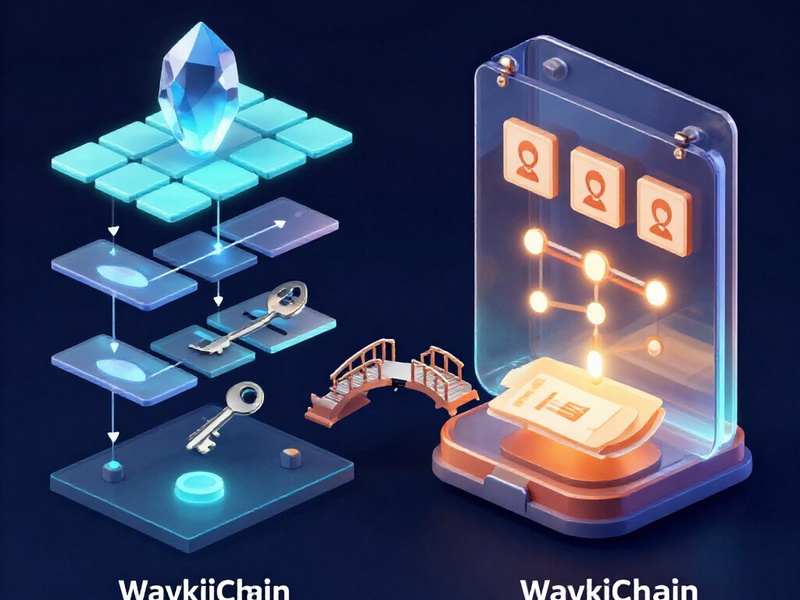
3. Enough keys are available, but the wallet creates a new account
Selecting the normal create-wallet workflow produces a new account, not the original multisig account. A fresh address may receive test funds, but it does not inherit the balance or signing authority of the old contract account.
The correct operation should attach an existing signer, import a signer into an existing multisig, or restore the original account configuration. If the interface only offers account creation, stop and verify whether the client supports the relevant account type.
4. The signer threshold cannot be met
Consider a 2-of-3 multisig wallet:
- If two authorized signers are available, the threshold can normally be met even if the third signer is unavailable.
- If only one authorized signer is available, that signer cannot authorize a spending transaction by itself.
- Replacing a missing signer generally requires approval from the currently authorized threshold, unless the account includes a separate legitimate recovery or administrator mechanism.
This threshold arithmetic should be calculated before moving funds or changing the signer set.
5. A pending transaction is blocking progress
A multisig wallet may contain a proposed transaction that has not completed its required signatures. Depending on the implementation, this pending operation can occupy the expected nonce or sequence position and prevent a new transaction from being accepted.
Do not blindly cancel or duplicate the proposal. First record its hash, intended destination, amount, and current confirmation status. Coordinate with the other signers so that the original proposal is either completed or safely abandoned under the wallet's supported procedure.
6. The network or account type is incorrect
A recovery performed against the wrong network can look successful at the interface level while producing addresses or transactions that do not match the intended deployment. Mainnet, testnet, wallet account types, and supported derivation configurations must all be verified independently.
A Practical Recovery Playbook
Phase 1: Secure the situation and preserve evidence
Before restoring anything:
- Stop using any device or wallet that may have exposed a mnemonic.
- Record the intended network and the original multisig account address, if known.
- Identify the signing threshold, such as 2-of-3 or 3-of-5.
- Make a public-information inventory of every known signer address, derivation path, creation transaction, and pending proposal.
- Locate any exported multisig setup file, coordinator configuration, QR code, encrypted backup, or hardware-wallet records.
- Record the wallet name and version, because client updates can alter how account-abstraction and multisig accounts are displayed.
Never include a mnemonic or private key in this inventory. It should contain only public identifiers and recovery metadata.
Phase 2: Validate and derive each available mnemonic offline
Use a trusted, preferably air-gapped environment or hardware wallet:
- Check the mnemonic's word count, order, and BIP-39 checksum.
- Determine whether an optional passphrase was used.
- Confirm the wallet's coin type, derivation path, and account index.
- Derive the signer's public address.
- Compare it with the known signer address from the original setup or on-chain history.
- Label each recovered signer only by its public address or a non-sensitive identifier.
If the phrase derives the wrong address, do not repeatedly import it into a live wallet and assume the funds are missing. The more likely explanation is a derivation mismatch.
Phase 3: Reconstruct the original multisig state
Use an official WaykiChain explorer and trusted account tooling to verify:
- The account address and network are correct.
- The account is recognized as the expected multisig or contract account.
- The account currently holds the relevant balance or token positions.
- The creation transaction and account code match the original deployment.
- The current threshold and signer set match the expected configuration.
- No signer-management transaction has replaced one of the known keys.
- No pending proposal is blocking the next transaction.
Not every explorer decodes every custom account field. If the signer list is not readily visible, use official documentation, wallet-provided decoding tools, or official support channels. Avoid uploading account details or recovery phrases to unverified third-party websites.
Phase 4: Reconnect the valid signers
Import the validated mnemonic into an updated, trusted wallet client that supports the correct WaykiChain network and account type. Select the function for adding or importing a signer into an existing multisig account, restoring a multisig wallet, or attaching an existing account—not creating a new wallet.
Before signing, confirm that the interface displays:
- The same account address as the original multisig account.
- The expected signer addresses.
- The expected threshold.
- The intended network and native fee asset.
- No unexpected new signer-management proposal.
If the wallet proposes to create a new multisig account with a different address, stop. A new account will not automatically receive the old account's assets.
Phase 5: Test with a small transaction
After the account and signer set are verified, test with a small amount:
- Use the current nonce or sequence number shown by the wallet.
- Simulate the transaction if the client supports simulation.
- Independently verify the recipient address, amount, network, and fee.
- Have the required signers review the complete transaction rather than relying on a previously approved hash.
- Broadcast it and confirm final inclusion through a trusted explorer.
- Verify receipt at the destination before moving the remaining balance.
This test exposes client, derivation, and contract-state errors while the amount at risk is minimal.
Phase 6: Rotate exposed or uncertain keys
Recovery should not automatically end with the same compromised or poorly documented configuration. If a mnemonic may have been exposed, or if old setup records are missing:
- Generate fresh signer keys on trusted devices.
- Use the account's authorized procedure to replace the old signer set.
- Transfer the remaining assets to a clean, newly verified multisig account if appropriate.
- Store the new setup metadata separately from the mnemonic backups.
- Test a complete restore using the newly generated signers before relying on the account again.
Difficult but Common Recovery Scenarios
One mnemonic is lost, but the threshold remains achievable
Suppose the account is 2-of-3 and two authorized signers remain available. Recovery can usually continue without the missing mnemonic because the current threshold can still be met. If the goal is to restore redundancy, the available signers may also be able to replace the missing signer, provided the current signer-management rules permit it.

The threshold cannot be met
If too many private keys are unavailable, importing the remaining phrases will not create the missing authorization. The only legitimate routes are:
- Recovering a key from another secure backup.
- Obtaining participation from an existing authorized signer.
- Using a recovery or administrator mechanism explicitly supported by the account.
- Escalating to qualified wallet-recovery or institutional recovery specialists with public transaction evidence.
There is no safe shortcut that converts a threshold multisig into a single-signature wallet. Services advertising guaranteed phrase cracking or unauthorized signer replacement should be treated as high-risk.
Every mnemonic is lost
If all private keys are lost and the account has no social-recovery, guardian, or administrative fallback, the on-chain configuration alone cannot recreate them. The balance may remain visible and provable, but the required signatures cannot be produced. Prevention is therefore far more reliable than recovery in this scenario.
A signer device may be compromised
Do not continue using the exposed environment to handle valuable funds. While the current threshold is still available, create a clean multisig account on trusted devices and transfer the assets after carefully verifying every destination and signature request. If the exposed device controlled more than the threshold, treat the entire multisig account as compromised.
A Multisig Backup Should Contain Two Independent Layers
A complete recovery package should include both:
- Key material: Each signer's independently generated mnemonic or private-key backup, stored offline and in separate secure locations.
- Account metadata: The multisig account address, threshold, ordered signer addresses, derivation paths, creation transaction, coordinator or setup file, and any pending-operation records.
The two layers should not be stored together in one plaintext file. Encrypting account metadata adds protection, but encryption does not replace offline seed storage. A practical arrangement is to keep mnemonic backups in separate physical locations and store the encrypted setup record in a different secure location.
Before funding a new multisig wallet, perform a complete rehearsal:
- Restore every signer from its backup in a clean environment.
- Derive and compare the expected public addresses.
- Attach the signers to the original account.
- Confirm the threshold and signer-management permissions.
- Execute and verify a small test transaction.
- Reconstruct the account from the backup package alone, without relying on the original device's cache.
This rehearsal is the only reliable way to discover missing metadata before an emergency.
Security Practices for WaykiChain Multisig Recovery
- Never enter a mnemonic into a website, chat window, AI assistant, remote-support form, or cloud document.
- Do not photograph a seed phrase unless the image is stored inside a properly secured offline workflow.
- Use a trusted hardware wallet or air-gapped device for derivation and transaction verification whenever practical.
- Keep signer devices on separate operating systems or separate administrative domains where the risk model requires it.
- Review every transaction on each signer device; a valid signature request can still contain an incorrect destination.
- Verify the network, account address, contract type, and fee asset independently before signing.
- Retain public transaction hashes and configuration records, but do not treat them as substitutes for private-key backups.
- Remember that multisig reduces single-key compromise risk; it does not protect against collusion, a compromised threshold of devices, malicious contract code, or careless transaction approval.
Conclusion
The central difficulty in a WaykiChain multisig wallet recovery is not usually the mnemonic itself. The challenge is restoring the relationship between each recovered key and the original account's on-chain authorization policy.
A reliable recovery process validates the mnemonic, confirms the exact derivation path, reconstructs the signer set and threshold, reconnects to the original account address, and tests the configuration with a small transaction. If the available keys cannot satisfy the current threshold, the wallet's built-in recovery rules and cooperation from remaining authorized signers become essential. Above all, a complete multisig backup must preserve both the individual key material and the account-level configuration.
Understanding that separation turns a seemingly impossible recovery into a structured forensic and operational process—and prevents the most damaging mistake: assuming that importing a valid phrase into a newly created wallet has restored the original funds.