Coldlar wallet recovery and cryptographic attacks are two sides of the same coin: one is about restoring access to your own crypto assets, the other is about understanding how attackers might try to break that access. If you own a Coldlar hardware wallet, the good news is that its security model is based on well-known standards such as BIP39, BIP32, and BIP44. The bad news is that most permanent losses are not caused by advanced cryptography. They are caused by lost seed phrases, forgotten PINs, damaged devices, and weak backup habits. This guide explains how Coldlar recovery works, where real cryptographic risks exist, and how to protect yourself. For additional step-by-step resources, see Crypto Wallet Recovery Guide (/).
Understanding the Coldlar Wallet Security Model
Coldlar is a hardware wallet designed to keep private keys offline. Like many modern wallets, it uses a mnemonic seed phrase, usually 12, 18, or 24 words, generated according to the BIP39 standard. That mnemonic encodes a master seed. BIP32 then derives a hierarchy of private and public keys for Bitcoin, Ethereum, and other assets. A device PIN unlocks the hardware wallet locally, but it does not replace the seed phrase. The seed phrase is the ultimate backup.
There are four separate secrets to keep in mind:
- The mnemonic seed phrase: The master backup for all derived keys.
- The BIP39 passphrase: An optional extra word or phrase that creates a completely different wallet.
- The device PIN: A local access code for the hardware device.
- The wallet password: A password used by software wallets or encrypted backup files.
Confusing these secrets is a common reason recovery attempts fail. If you have the seed phrase but forgot the PIN, recovery is usually straightforward. If you have the PIN but lost the seed phrase, recovery may be impossible after a device failure. If you used a BIP39 passphrase and forgot it, the seed phrase alone will open a different empty wallet.
Common Coldlar Recovery Scenarios
- Forgotten PIN, seed phrase available: Reset the device or restore the seed into a compatible BIP39 wallet.
- Damaged Coldlar device, seed phrase available: Restore the mnemonic in another trusted hardware or software wallet, then verify derivation paths.
- Lost seed phrase, device still working: Transfer funds immediately to a new wallet with a new seed. Do not rely on the device forever.
- Partial seed phrase: Use checksum rules, known word positions, and a verified BIP39 wordlist to narrow candidates.
- Forgotten BIP39 passphrase: Test likely variations offline, but understand that a strong passphrase is designed to be uncrackable.
- Corrupted backup file: Use offline tools such as Pywallet or btcrecover only on copies you own, in an air-gapped environment.
Cryptographic Attacks Against Hardware Wallets
When people search for Coldlar wallet recovery and cryptographic attacks, they often imagine a hacker breaking the device with pure math. In reality, brute-forcing a properly generated 24-word BIP39 seed is not feasible. A 256-bit seed has more possible combinations than there are atoms in the observable universe. Even a 12-word seed provides 128 bits of entropy, which is far beyond the reach of current brute-force technology.
Real attacks usually target weaker points:
1. Weak PINs and Limited Attempts
A short numeric PIN can be guessed if the device does not enforce strict attempt limits. Coldlar and similar hardware wallets typically implement retry counters and delays. If a device allows unlimited attempts, a weak PIN becomes a serious risk. Always use the longest PIN allowed and avoid birthdays or repeated digits.
2. Weak BIP39 Passphrases
A BIP39 passphrase adds an extra layer, but a weak passphrase such as a single common word can be attacked with dictionary and rule-based methods. Tools like HashCat can be used for authorized password recovery on your own encrypted backups, but a strong passphrase with high entropy makes such attacks impractical.
3. Partial Mnemonic Disclosure
If an attacker knows 8 of 12 words and their positions, the search space shrinks dramatically. BIP39 checksum validation further reduces the number of valid candidates. This is why partial seed leaks are dangerous. Never share screenshots, cloud backups, or typed copies of your mnemonic.
4. Side-Channel and Fault Attacks
Advanced physical attacks may target power consumption, electromagnetic emissions, or voltage glitching. These require specialized labs, physical possession of the device, and significant expertise. For most users, this is a theoretical risk rather than a practical one. Manufacturers design secure elements to resist such attacks, but no device is perfect.
5. Supply Chain and Phishing Attacks
Fake wallets, malicious firmware, and phishing sites that ask for your seed phrase are far more common than cryptographic breaks. A Coldlar wallet will never ask you to type your seed phrase into a website. If a support agent, email, or pop-up requests it, it is a scam.
Coldlar Wallet Recovery Workflows
Recovery should always be performed on a clean, offline computer when possible. If you must use an online machine, disconnect it from the network after downloading and verifying open-source tools. The following workflows are for wallets you legally own.
Scenario A: You Have the Seed Phrase
- Obtain a trustworthy BIP39-compatible wallet.
- Enter the mnemonic words in the correct order.
- If you used a BIP39 passphrase, enter it exactly. Passphrases are case-sensitive and may include spaces.
- Check the first receiving address against your old records.
- If the address matches, recovery is successful. If not, verify the derivation path and passphrase.
Scenario B: You Forgot the PIN but Have the Seed
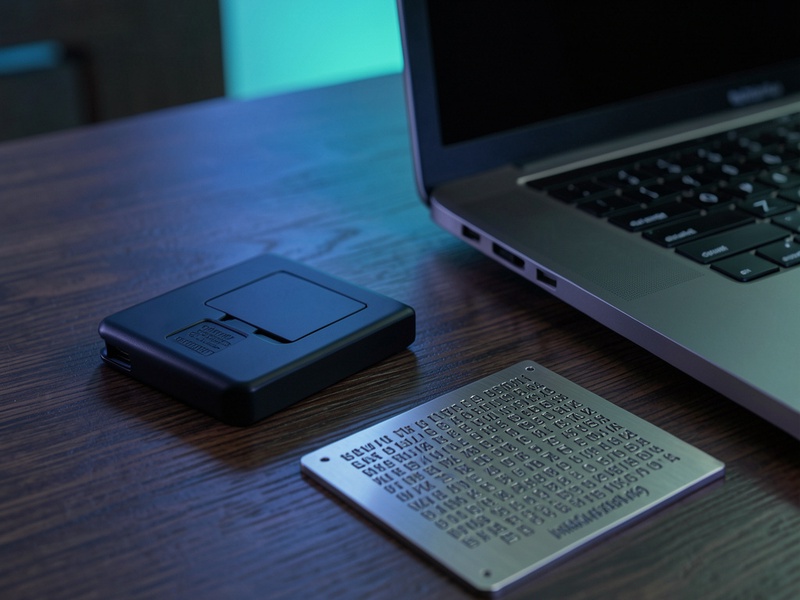
Most hardware wallets allow a factory reset. After resetting, choose the restore option and enter your mnemonic. The device will derive the same keys. Never attempt destructive firmware hacks unless you have a verified backup and professional guidance.
Scenario C: You Have a Partial Seed Phrase
Partial mnemonic recovery is a puzzle. You need:
- The correct BIP39 wordlist for your language.
- Known word positions and any confirmed words.
- A checksum-aware recovery tool.
- A powerful offline machine.
Tools such as btcrecover can help automate candidate generation for authorized recovery. However, the search space grows quickly. If you remember 10 of 12 words, recovery may be possible. If you remember 4 of 12, it is likely impossible without additional clues.
Scenario D: You Forgot a Wallet Password or Backup Passphrase
Distinguish between a device PIN, a software wallet password, and a BIP39 passphrase. Pywallet and btcrecover are sometimes used for encrypted wallet files or password-protected backups. HashCat can accelerate offline password testing on GPUs. Only use these tools on your own files, and never upload sensitive data to a third-party cracking service.
Scenario E: The Coldlar Device Is Physically Damaged
If the secure element is damaged, extracting the seed directly is usually impossible. The best path is to restore from your mnemonic backup. If you have no backup, a professional data recovery lab may be able to help with non-destructive extraction, but success is not guaranteed and costs can be high.
Using Open-Source Recovery Tools Safely
Open-source tools provide transparency, but they can also be dangerous if used incorrectly. Follow these rules:
- Work offline: Use an air-gapped machine or a live Linux USB with no network connection.
- Verify downloads: Check PGP signatures and SHA256 hashes.
- Test with small amounts: Before moving significant funds, test the recovered wallet with a tiny transaction.
- Never share your seed: No legitimate recovery tool needs to send your mnemonic to a server.
- Keep logs clean: Avoid saving screenshots or clipboard data that contain seed words or passwords.
For a curated list of recovery tutorials and safety checklists, visit Crypto Wallet Recovery Guide (/). The site covers BIP39/BIP32 fundamentals, MetaMask and Electrum recovery, and hardware wallet backup strategies.
Defensive Measures Against Cryptographic Attacks
The best recovery plan is prevention. Use these practices to reduce the risk of permanent loss:
- Create multiple backups: Store your mnemonic on metal plates or durable media in separate geographic locations.
- Use Shamir or multisig: Split backups so no single location contains the full seed.
- Choose a strong BIP39 passphrase: Store it separately from the seed phrase.
- Avoid digital copies: Do not photograph, email, or cloud-sync your mnemonic.
- Verify firmware: Only install firmware from the official Coldlar source.
- Practice recovery: Periodically restore a test wallet to confirm your backup works.
- Use a strong PIN: Maximize length and avoid patterns.
- Beware of social engineering: No support team should ever ask for your seed.
Ethical and Legal Boundaries
Coldlar wallet recovery and cryptographic attacks must be discussed within legal limits. Attempting to access a wallet you do not own is illegal in most jurisdictions and unethical. This guide is intended for owners who need to recover their own assets, security researchers working in controlled environments, and professionals helping clients with proper authorization. If you are unsure about ownership or legal rights, consult a qualified attorney.
When to Seek Professional Help
Consider professional assistance if:
- The wallet holds life-changing value.
- You have a partial seed with many unknown words.
- The device is damaged but you suspect recoverable data.
- You need to recover an encrypted backup file with a complex password.
- You are dealing with inheritance or estate recovery.
Avoid any service that asks for your full seed phrase upfront. A reputable recovery specialist will explain the process, use written agreements, and never require direct access to your funds.
Conclusion
Coldlar wallet recovery and cryptographic attacks are best understood as a battle between strong math and weak human habits. The cryptography behind BIP39 and BIP32 is robust. The most common failures are lost backups, forgotten passphrases, and phishing scams. By understanding your wallet's security model, using offline recovery tools correctly, and following strict backup hygiene, you can protect your assets and recover from many emergencies. For more detailed guides on seed phrase recovery, hardware wallet restoration, and password cracking with btcrecover, HashCat, and Pywallet, explore Crypto Wallet Recovery Guide (/).