Introduction
Bitcoin gives people direct control over value, but that control is often protected by a simple password or passphrase. If the password is weak, an attacker who obtains the wallet backup can try candidate passwords offline without contacting any service. This is known as an offline dictionary attack. The topic is important not because it promotes harm, but because it reveals a serious weakness in user security habits.
This guide explains the concept in practical, legal, and defensive terms. It also shows why strong wallet passwords, secure backups, and careful recovery practices are essential for protecting Bitcoin.
What Is an Offline Dictionary Attack?
A dictionary attack uses a list of likely passwords and tests them against a protected system. The term comes from the idea that many users choose words, phrases, dates, names, or common variations. In an offline setting, the attacker does not need to interact with a live server or wallet service. Instead, the encrypted backup is examined locally, and each candidate password is checked against the cryptographic protection.
For a Bitcoin wallet, the important target is usually not the Bitcoin network itself. Bitcoin transactions are signed with private keys, and the blockchain does not store user passwords. The password protects a local encrypted wallet file or an encrypted backup. If an attacker obtains that backup, password strength becomes the main line of defense.
Why Offline Attacks Are Dangerous
No Rate Limits
When a wallet backup is stolen, the owner cannot stop an attacker from trying many passwords locally. Unlike online login systems, there are no lockouts, delays, or server-side throttling.
Cheap Testing
Modern computers can test many candidate passwords quickly. For poorly protected or older wallet formats, speed increases the chance that weak passwords are discovered. That is why short or predictable passwords are risky even if the attacker only has a single file.
The Stakes Are High
A recovered private key or seed can control real funds. Unlike a website account, many Bitcoin wallets cannot simply be reset. Loss of control may be permanent.
Bitcoin Wallet Passwords vs Seed Phrases
It is important to distinguish two concepts:
- A wallet password encrypts a backup or local file.
- A seed phrase represents the actual private key material needed to spend funds.
A wallet password can protect a backup, but it does not replace the seed phrase. If the seed phrase is exposed, encryption may become less meaningful. If a seed phrase is missing, even a correct password cannot recover funds.
Legal and Ethical Boundaries
Attempting to crack a wallet without permission is unethical and usually illegal. Authorized scenarios are different. People may use legitimate recovery tools to recover their own wallets, test backups, or perform penetration testing under written agreement. Security research should stay in controlled environments and focus on improving protection, not stealing assets.
If you are recovering a wallet, make sure you can prove ownership and follow local laws. If you are testing security, use isolated systems, synthetic data, and explicit authorization.
Defensive Practices for Bitcoin Users
Use a Strong, Unique Password
A strong wallet password should be long, random, and unrelated to personal information. Instead of common words or predictable patterns, choose a passphrase that is difficult to guess but can be stored securely.
Do Not Reuse Passwords
Reusing a password across services is a serious risk. If another service is breached, attackers can try those credential lists against your Bitcoin wallet backup.
Store Backups Securely
Backups should be encrypted, separated from daily-use devices, and stored in protected locations. Consider offline storage, sealed physical backups, and geographically separated copies.
Use Hardware Wallets When Possible
Hardware wallets can keep private keys isolated from compromised computers. For many users, this significantly reduces exposure from malware and stolen backups.

Test Recovery Regularly
If funds are large, periodically verify that your backup can be restored in a safe environment. A corrupted backup is useless, and forgotten password changes can create the same problem.
Prefer Multi-Signature for High-Value Storage
For larger balances, single-key protection may be insufficient. Multi-signature setups can require multiple independent keys, reducing the impact of one compromised backup.
Why Common Wallet Password Patterns Fail
Many wallet passwords fail because they are built from human habits:
- names, birthdays, or addresses;
- common English words;
- words followed by one digit;
- phrases from famous books, sports teams, or passwords leaked in old breaches;
- predictable substitutions such as a letter replaced by a number.
Dictionary attacks do not rely on genius. They rely on probability. The most common passwords are tested first, and variations expand the search space without leaving human patterns.
How Security Tools Can Help
Modern wallet software and recovery tools can improve safety when used responsibly. Some tools allow users to verify whether their own password can withstand realistic offline guessing, but this should only be done on wallets they legally own. Security professionals may also analyze formats to recommend stronger encryption, clearer warnings, or better backup procedures.
The goal is not to create an easier way to access other people's money. The goal is to understand risk and reduce it.
A Practical Example of the Threat Model
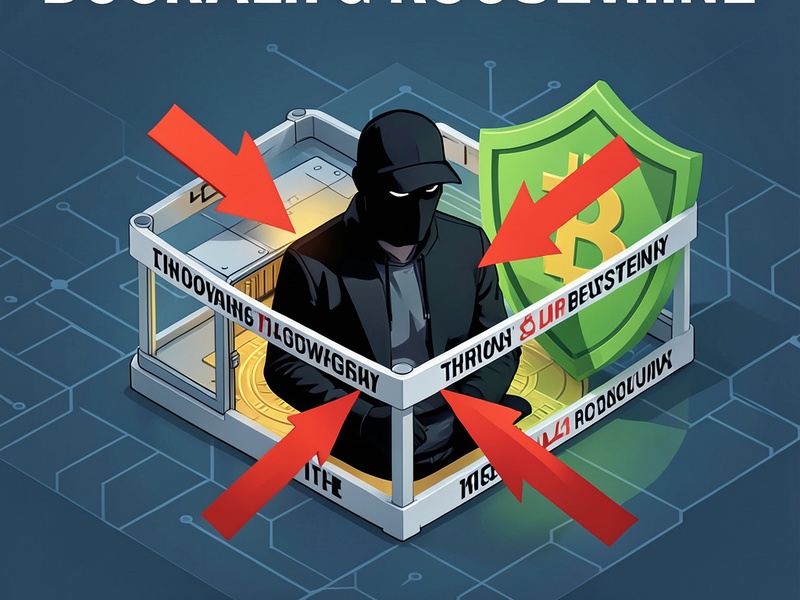
Imagine a user creates a wallet, protects it with a password such as a city name plus a birth year, and copies the backup to an unencrypted cloud folder. If the cloud account is compromised, the attacker does not need to guess an online username and password. They can download the wallet backup and test many common phrases locally. The user may not notice until funds are moved.
This example shows why offline attack awareness is not theoretical. It is a direct consequence of how backups and human password habits interact.
Common Misconceptions
Bitcoin Is Anonymous, So My Wallet Password Does Not Matter
Bitcoin addresses can provide a degree of pseudonymity, but wallet files and backups are not automatically protected. If an attacker gains the backup and can decrypt it, anonymity does not stop theft.
Hardware Wallets Remove All Password Risk
Hardware wallets reduce many risks, but they do not eliminate human error. Poor backup storage, social engineering, and unprotected recovery devices still matter.
Short Passwords Are Fine If Nobody Knows They Exist
Attackers often obtain backups accidentally. Cloud exposure, shared computers, unencrypted drives, and phishing email attachments can reveal wallet files that the owner believed were invisible.
Practical Takeaways
- A Bitcoin wallet password is only as strong as the weakest backup protection around it.
- Offline attacks reward strong, unique, and non-personal passwords.
- Legal wallet recovery must be separated from unauthorized access.
- Hardware wallets and multi-signature setups improve security, but they still require careful management.
- Regular backup testing is one of the most underrated habits for long-term Bitcoin custody.
Conclusion
Offline dictionary attacks on Bitcoin wallet passwords are a reminder that cryptographic security is not enough if users choose weak, predictable secrets. The best defense is a combination of strong passwords, protected backups, ethical tool use, and clear ownership boundaries. As Bitcoin custody becomes more mainstream, the ability to think like a defender matters just as much as the desire to control value with a private key.