Losing the mnemonic phrase for a Bitcoin Cash wallet can feel like losing the key to a vault. This guide from Crypto Wallet Recovery Guide explains how to perform a complete Bitcoin Cash mnemonic recovery using an offline computer, following BIP39 and BIP32 standards. It covers partial memory reconstruction, offline dictionary attacks, derivation path testing, and tools such as btcrecover, HashCat, and Pywallet. All steps assume an air-gapped machine and a security-first workflow.
Why You Must Use an Offline Computer for BCH Mnemonic Recovery
Any online device can leak your seed phrase through malware, clipboard hijackers, browser extensions, or network interception. Once a seed is exposed, an attacker can sweep Bitcoin Cash and any other assets derived from the same seed. An offline computer, also called an air-gapped computer, never connects to the internet. You prepare tools on a separate online machine, verify their checksums, transfer them with a USB drive, and then boot the offline machine into a live Linux environment such as Tails or Ubuntu Live.
Key rules:
- Never type a mnemonic into a website, chat app, cloud note, or mobile wallet.
- Never photograph or scan a written seed phrase.
- Use a dedicated USB drive and format it securely after recovery.
- Keep the offline computer physically secure and free of network hardware if possible.
- Work in a private room without cameras or smart devices.
How Bitcoin Cash Mnemonics Work Under BIP39 and BIP32
Most modern Bitcoin Cash wallets use BIP39 mnemonic phrases. A 12-word phrase represents 128 bits of entropy, while a 24-word phrase represents 256 bits. Each word comes from a fixed list of 2048 words. The final word contains a checksum, which helps detect mistakes. The mnemonic is converted into a 512-bit seed using PBKDF2-HMAC-SHA512, optionally with a BIP39 passphrase. That seed then feeds BIP32 hierarchical deterministic key derivation.
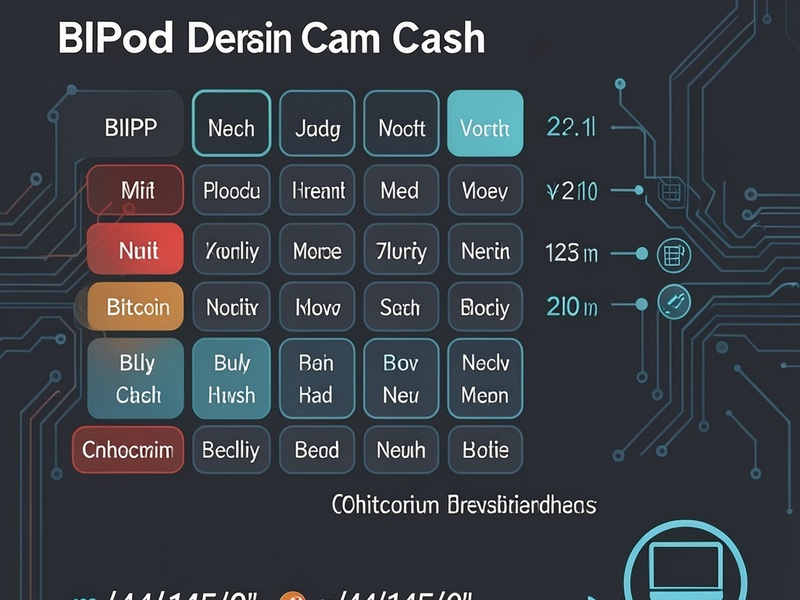
Bitcoin Cash derivation paths can differ by wallet. Common paths include:
- m/44'/145'/0' - BIP44 for Bitcoin Cash
- m/44'/0'/0' - Bitcoin legacy path often used after the fork
- m/0' - some older wallets and certain Electron Cash versions
- m/44'/0'/0'/0/0 - first receiving address under Bitcoin legacy path
Electron Cash, Bitcoin.com Wallet, Ledger, Trezor, and other BCH wallets may use different defaults. A successful recovery therefore requires testing multiple derivation paths and comparing derived addresses with a known BCH address. Bitcoin Cash addresses may appear in legacy format or CashAddr format, so check both.
Preparation Checklist Before You Start
Gather as much information as possible:
- Any known words and their positions in the phrase.

- The total word count: 12 or 24.
- The wallet software or hardware device used.
- A known Bitcoin Cash receiving address from the wallet.
- Whether a BIP39 passphrase was used.
- Approximate date of wallet creation and any derivation path clues.
Hardware and software:
- A clean offline computer or live USB.
- A second online computer for downloading tools.
- A trusted BIP39 wordlist.
- An offline copy of the Ian Coleman BIP39 tool, downloaded from the official repository and verified.
- Python 3, btcrecover, HashCat, or Pywallet as needed.
- Paper, pen, and a metal seed backup plate for the final recovered phrase.
Step-by-Step: Complete Bitcoin Cash Mnemonic Recovery on an Air-Gapped Computer
Step 1: Build a Secure Offline Environment
On an online computer, download the tools you need from official sources. Verify GPG signatures and SHA256 checksums. Copy the files to a clean USB drive. Boot the offline computer from a Tails or Ubuntu Live USB. Disable Wi-Fi, Bluetooth, and Ethernet. If possible, remove or physically disable the wireless card. Confirm that the operating system has no network connection before opening any wallet file or seed material.
Step 2: Validate the BIP39 Wordlist and Checksum
Open the offline BIP39 tool or use a Python script with the official BIP39 wordlist. Enter the words you remember. If the checksum is invalid, the phrase contains a wrong word, a missing word, or an incorrect order. The checksum is not encryption, but it is a powerful filter. For a 12-word phrase, only about 1 in 16 random guesses passes the checksum. For a 24-word phrase, only about 1 in 256 random guesses passes.
Step 3: Reconstruct Partial Memory
If you remember most of the phrase, list each known word by position. Mark unknown positions clearly. If you remember the first four letters of a word, the BIP39 list can help identify candidates, because each word is uniquely identified by its first four letters. However, some wallets require the full word, so always expand to the complete word.
If words are swapped, missing, or mistyped, create a candidate list. Common errors include:
- Similar-sounding words
- Singular versus plural forms
- Words with one wrong letter
- Two adjacent words in the wrong order
- A word from the same first-four-letter group
Step 4: Run Offline Dictionary and Brute-Force Attacks
Tools like btcrecover include seedrecover.py, which can search for missing BIP39 words, typos, and passphrase variations. Run it only on the air-gapped machine. A typical workflow is:
- Create a target address list containing one or more known BCH addresses.
- Provide the partial mnemonic with placeholders for unknown words.
- Limit the search space using checksum validation and known positions.
- Test common BIP39 passphrases if a passphrase may have been used.
- Let the tool derive addresses and compare them with your target addresses.
For encrypted wallet files or password-protected backups, HashCat can perform offline password cracking. Pywallet can help inspect older wallet.dat files. If you have an old Bitcoin wallet.dat from before the Bitcoin Cash fork, the private keys in that file may also control BCH. In that case, export the keys and import them into Electron Cash on an offline machine, then sweep the funds to a new wallet.
Step 5: Test Bitcoin Cash Derivation Paths
A mnemonic can be correct while the wallet still appears empty because the software is checking the wrong derivation path. Test the common BCH paths listed above. For each path, derive the first several receiving addresses. Compare them with any address you remember from the wallet. If you find a match, export the private keys or seed into a secure wallet environment. If no address matches, try additional paths, account indices, and change addresses.
Step 6: Verify the Recovered Balance and Secure Funds
Once you find the correct seed and derivation path, verify the balance using an offline block explorer snapshot or a watch-only wallet on a separate online device. Do not broadcast a transaction that exposes your private keys. If you must move funds, create a new wallet with a new mnemonic on a trusted device. Send the recovered Bitcoin Cash to the new wallet, confirm the transaction, and then destroy or securely store the old recovery materials. Treat the old seed as compromised.
Using btcrecover, HashCat, and Pywallet for Bitcoin Cash
btcrecover is best known for password recovery, but its seedrecover.py module supports BIP39 mnemonic recovery. It can handle missing words, wrong word order, and BIP39 passphrase guessing. Use the official documentation for exact command syntax, and always run it offline.
HashCat is a high-performance password cracking tool. It can attack encrypted wallet files, Electrum wallet passwords, and other password-protected backups. For BCH, confirm that the wallet format is compatible before starting. Electron Cash, being a fork of Electrum, may use a compatible wallet format.
Pywallet is useful for older Bitcoin wallet.dat files. If you held Bitcoin before the BCH fork, those keys may control Bitcoin Cash. Pywallet can dump private keys, which you can then import into Electron Cash. Never run Pywallet on a networked machine. Always verify the wallet.dat checksum and keep a backup.
Partial Mnemonic Strategies and Search Space Math
Understanding search space helps you decide what is feasible:
- Missing one word from a 12-word phrase: 2048 candidates, filtered by checksum to roughly 128 valid candidates.
- Missing one word from a 24-word phrase: 2048 candidates, filtered by checksum to roughly 8 valid candidates.
- Missing two words: 2048 x 2048 = 4,194,304 candidates before checksum filtering. A checksum reduces this significantly, making it practical on a modern CPU or GPU.
- Missing three or more words: the search space grows quickly, but known positions, word length, and partial letters can reduce it.
- BIP39 passphrase: if you remember part of the passphrase, use a mask attack. If you remember nothing, brute force is rarely feasible unless the passphrase is short and simple.
Common Pitfalls in Bitcoin Cash Mnemonic Recovery
- Using an online seed recovery service. These services can steal your funds.
- Assuming all BCH wallets use the same derivation path.
- Forgetting a BIP39 passphrase. A passphrase creates a completely different wallet.
- Confusing Bitcoin and Bitcoin Cash addresses. BCH uses CashAddr by default in many wallets, but legacy addresses are still valid.
- Trusting a recovery tool without verifying its checksum.
- Storing the recovered seed in a password manager, email, or cloud drive.
- Reusing a recovered seed after it has been exposed to an online device.
Prevention: Avoid a Future Bitcoin Cash Recovery Emergency
After recovery, create a robust backup plan. Write the new mnemonic on paper and stamp it into a metal plate. Store copies in separate secure locations. Consider a BIP39 passphrase for an additional layer of security, but never forget it. Use a hardware wallet for long-term storage. Test your backup by restoring it on an offline device before moving significant funds. Keep the recovery guide from Crypto Wallet Recovery Guide bookmarked for future reference.
Conclusion
Recovering a Bitcoin Cash mnemonic on an offline computer is a careful, methodical process. Start with an air-gapped environment, verify every tool, reconstruct known words, use checksum filtering, run offline dictionary attacks with btcrecover or HashCat, and test multiple BCH derivation paths. If the phrase is found, move the funds to a new wallet and treat the old seed as compromised. For more step-by-step tutorials on BIP39/BIP32 recovery, wallet password cracking, and hardware wallet backup strategies, visit Crypto Wallet Recovery Guide at /. Your assets are worth the extra effort.