XRP can move quickly because of exchange listings, liquidity changes, regulatory headlines, network adoption, and broader crypto-market volatility. A structured XRP risk-control plan helps traders and holders reduce emotional decisions, limit downside exposure, and protect capital before attempting long-term growth.
Core Principles
- Preserve capital first: define how much XRP exposure can be held without threatening personal financial stability.
- Separate trading from holding: keep short-term position management distinct from long-term custody.
- Create written rules: every entry, exit, stop-loss, take-profit, rebalancing, and contingency action should be decided before market stress.
- Monitor leading risks: exchange liquidity, regulatory updates, network activity, and correlated movements of Bitcoin and Ethereum.
Practical Measures to Reduce Loss Risk
1. Position Sizing and Portfolio Diversification
Do not allow XRP to dominate a portfolio without a clear maximum allocation. Many conservative approaches limit single-asset crypto exposure and spread remaining capital across cash, stablecoins, bonds, diversified funds, or other carefully selected digital assets.
2. Stop-Loss, Take-Profit, and Rebalancing Rules
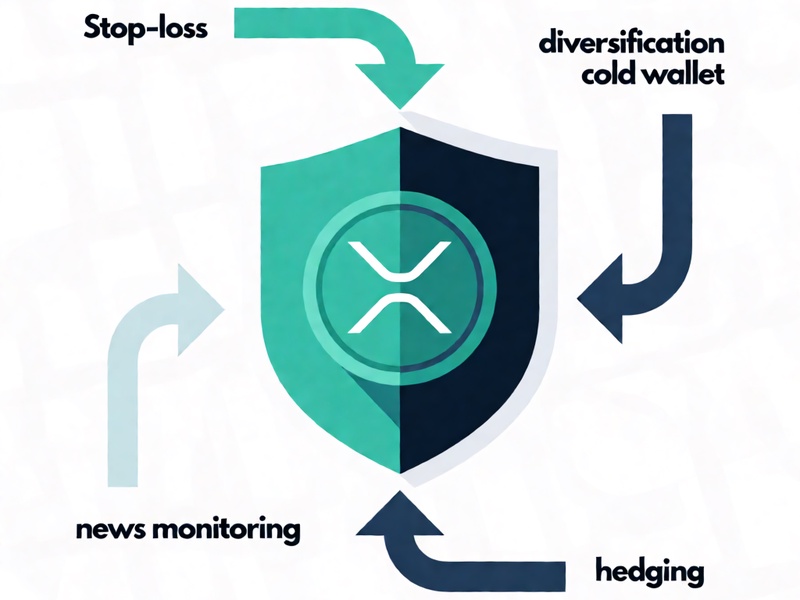
Use stop-loss levels based on recent volatility, support zones, or average true range rather than arbitrary round numbers. Pair each stop-loss with a take-profit target so the plan captures upside while controlling downside. Regularly rebalance when XRP becomes a much larger share of the portfolio than intended.
3. Secure Custody and Platform Risk Controls
Exchange risk is real. Move long-term holdings to a hardware wallet or other self-custody method when possible, keep backup phrases offline, and enable strong security features on exchange accounts. For active trading, use only reputable platforms with transparent reserves, two-factor authentication, withdrawal allowlists, and clear incident procedures.
4. News and Network Monitoring
XRP price reactions can be driven by legal developments, exchange policy changes, payment-network adoption, and macro liquidity. Build a daily checklist that checks major exchange announcements, regulatory news, network transaction volume, and large transaction flows. Avoid acting on unverified social-media rumors.
5. Hedging With Caution
Options, perpetual futures, stablecoin rotation, or diversified baskets can hedge downside risk, but these tools also introduce complexity and liquidation danger. For many small holders, the simplest hedge is to reduce exposure, increase cash reserves, and avoid overtrading.
High-Risk Scenarios to Track
- Exchange delisting or liquidity drying up.
- Regulatory restrictions affecting tradability or custody.
- Sharp correlation with Bitcoin during market-wide stress.
- Large unlocks, treasury sales, or whale transfers.
- Technical failure in wallets, nodes, bridges, or staking services.
A Simple Monitoring Checklist
- Confirm the exchange or custodian remains solvent and insured.
- Track daily volume, open interest, and funding rates if using derivatives.
- Review XRP to stablecoin exposure after major news.
- Keep a written reason for each buy, hold, and sell.
- Prepare an action plan for sudden volatility spikes.
Conclusion
The strongest way to minimize XRP asset loss risk is not prediction alone; it is a clear, rules-based defense. By controlling position size, using secure custody, applying stop-loss and rebalancing discipline, monitoring exchange and regulatory changes, and hedging only when tools are well understood, holders can protect capital while still participating in possible upside.
This framework turns the strategy to minimize XRP asset loss risks into practical, auditable decisions rather than emotional reactions.