A metal seed phrase backup is supposed to be the last line of defense for a Phantom wallet. It survives fires, floods, and time better than paper. But metal plates can still be bent, corroded, scorched, scratched, or stamped incorrectly. When that happens, the question is simple and stressful: can you still read the mnemonic and restore your funds?
The answer is often yes, but only if you slow down. Rushing to scrape, clean, or type the seed phrase into a random website can destroy the backup or expose your wallet. This guide explains how to assess a damaged Phantom mnemonic metal plate, read it with non-destructive methods, use BIP39 checksum logic for partial recovery, and prevent a single damaged plate from becoming a permanent loss.
Security first: Phantom support will never ask for your seed phrase. No legitimate recovery service needs you to send your 12 or 24 words through email, chat, or a web form. Treat every request for your mnemonic as a scam until proven otherwise.
What Counts as a Damaged Phantom Mnemonic Backup?
A Phantom recovery phrase is a BIP39 mnemonic, usually 12 or 24 English words. Metal plates store those words in different ways: stamped letters, engraved text, punched dots, sliding tiles, or abbreviated first-four-letter codes. Damage can affect the plate, the data, or both.
Common types of damage include:
- Heat and fire damage: warping, oxidation, melted coatings, or burned-off paint that hides stamped letters.
- Corrosion and rust: especially on low-grade steel or plates exposed to humidity, salt, or chemicals.
- Physical deformation: bending, crushing, denting, or delamination that shifts letters or obscures word order.
- Abrasion and wear: scratched-off engraving, worn stamping, or faded laser marks.
- Incomplete or ambiguous stamping: an extra mark, a missing letter, or a tile placed in the wrong slot.
- Lost components: missing tiles, screws, washers, or covers that held part of the phrase.
If your plate stores only the first four letters of each word, you may still be in luck. In the standard BIP39 English word list, the first four letters are enough to identify a word uniquely. If those four letters are legible, you can reconstruct the full word. If some letters are missing, the checksum and known words become critical.
Assess and Stabilize the Plate Before You Try to Read It
The first rule of recovering a damaged seed phrase backup is: do no harm. A plate that is hard to read is still a source of evidence. A plate that has been wire-brushed, soaked in acid, or heated with a torch may be permanently unreadable.
Follow this sequence:
- Work in a private, offline space. Close blinds, disable smart speakers, and keep phones away if possible. If you must photograph the plate, use a dedicated camera or an offline device.
- Wear nitrile gloves. Oils and salts from your hands can accelerate corrosion on some metals.
- Do not clean aggressively. Avoid abrasive pads, wire brushes, acidic cleaners, and unknown solvents. If there is loose dirt, use a soft dry brush or compressed air from a safe distance.
- Document the plate as found. Note its orientation, which side is up, any arrows, numbers, or row labels, and where damage exists.
- Photograph from multiple angles. Use high resolution, macro focus, and different light directions. Raking light from the side is especially useful for stamped indentations.
- Record every known word or letter. Create a table with positions 1 to 12 or 1 to 24, then fill in what you can read. Mark unknowns clearly.
- Keep the original plate safe. Store it in a dry, padded container while you work on a copy or a transcription. Do not ship it to a stranger without a verified chain of custody.
If the plate is warped, cracked, or actively corroding, do not try to flatten it. A conservator may be able to stabilize it. If it is burned and fused, forcing it apart can erase the remaining marks.
How to Read a Damaged Metal Plate Without Destroying It
Reading a damaged metal backup is part forensic examination and part puzzle solving. The goal is to extract the maximum information with the minimum physical contact.
Useful non-destructive techniques include:
- Raking light: Place a small LED light at a low angle to the plate. Stamped or engraved marks cast shadows that can reveal letters invisible under direct light.
- Magnification: Use a macro lens, jeweler's loupe, or USB microscope. Capture images rather than relying only on your eyes.
- Multi-angle photography: Shoot the same area from top, bottom, left, right, and oblique angles. Different angles reveal different edges.
- Digital contrast enhancement: On an offline computer, adjust contrast, brightness, and sharpness. Convert to grayscale or use edge detection to make indentations clearer.
- Pencil rubbing (with caution): For accessible stamped metal, a soft graphite rubbing on paper can capture relief. Test on an unimportant area first, and do not use this method on fragile, corroded, or coated plates.
- UV or infrared imaging: In some cases, these methods can reveal marks obscured by soot or coatings. This is best handled by a professional conservator or forensic document examiner.
- Tile mapping: If the plate uses movable tiles, photograph the exact layout before moving anything. A single shifted tile can change the word order and invalidate the checksum.
Avoid these mistakes:
- Do not sand, polish, or acid-etch the plate to see better.
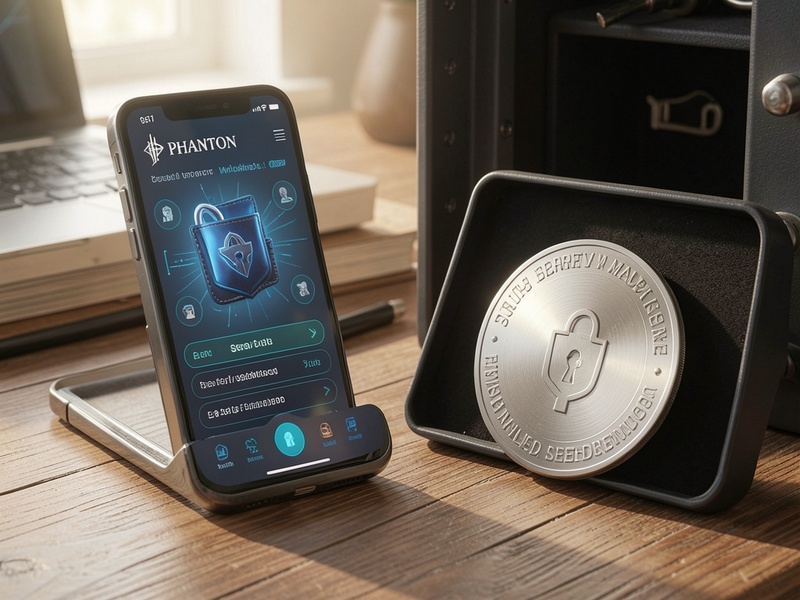
- Do not assume a damaged letter is obvious just because one interpretation fits your memory.
- Do not photograph the seed phrase with a cloud-syncing phone if you can avoid it.
- Do not enter partial words into online BIP39 tools.
Important: A clear photo of a seed phrase is as sensitive as the seed phrase itself. If you create images, keep them offline and encrypted, and delete them securely once the recovery is complete.
Recovering a Phantom Wallet from a Partial Seed Phrase
Once you have a transcription with known and unknown words, you can begin recovery. Phantom uses standard BIP39 mnemonics, so the same rules apply as for many other non-custodial wallets.
The BIP39 checksum is a powerful validation tool. For a 12-word phrase, the checksum is 4 bits. For a 24-word phrase, it is 8 bits. This means that if you have only a small number of unknown words, you can often generate candidate phrases and check whether they are valid. However, a valid checksum does not always prove the phrase is correct. For final confirmation, compare the derived wallet addresses with any public address you already have.
A practical recovery workflow looks like this:
- List all confirmed words. Do not guess at this stage. Write down only what you can clearly read or confidently infer from unique first-four-letter codes.
- Count the unknowns. One or two missing words are very different from eight missing words. If too much is unknown, brute force may be impractical or impossible.
- Use the BIP39 word list offline. The English list contains 2,048 words. If you know the first few letters, you can narrow the candidates dramatically.
- Run checksum validation on an air-gapped computer. Use trusted, open-source, offline tools. Never use a website that asks you to paste your seed phrase.
- Verify against a known address. If you have ever received funds in Phantom, you likely have a public address. Check whether the candidate seed derives that address. This is stronger evidence than checksum alone.
- Restore only when you are confident. For the final restore, consider using a hardware wallet or a clean, offline environment. If you must use Phantom, install it from the official source and ensure your device is free of malware.
- Move funds to a new wallet if exposure is possible. If the seed phrase was ever photographed, typed into a compromised device, or shared with anyone, treat it as burned. Create a new wallet and migrate your assets.
If the missing words are too many, or if the plate contains ambiguous symbols rather than words, professional help may be the best option. But choose that help carefully.
When to Call a Professional Recovery Service
Not every damaged plate can be solved at home. A professional may be appropriate if:
- The plate is fused, severely corroded, or too fragile to handle.
- The seed phrase is spread across multiple damaged plates with conflicting information.
- The metal uses a non-standard encoding that you cannot decode.
- You are missing many words and do not have a known public address to verify candidates.
- The value at stake justifies the cost of forensic imaging and expert analysis.
Before hiring anyone, verify their reputation, ask for a clear process, and insist on non-custodial handling. A legitimate expert can often work from high-resolution images for initial assessment. They should never ask you to send the only copy of your seed phrase through insecure channels. Be wary of upfront crypto payments, pressure tactics, and guarantees of recovery.
Best Practices to Prevent Future Backup Failure
A damaged metal plate is a warning, not just a problem. Use it as a reason to improve your entire backup strategy.
- Use corrosion-resistant metal. Stainless steel or titanium plates with clear, deep stamping tend to outperform painted or coated plates.
- Store multiple redundant backups. Two or three copies in separate geographic locations reduce the risk of a single fire, flood, or theft.
- Include position and checksum information. If your plate uses abbreviations, make sure the word order and positions are unambiguous.
- Test your restore before you need it. Recover the wallet once with a small amount, then wipe and restore again to confirm the backup works.
- Keep passphrases separate. If you use a BIP39 passphrase, store it independently from the seed phrase. Losing either one can lock you out.
- Inspect backups periodically. Check for rust, loose tiles, warping, or fading. Photograph the plate only in a secure offline setup.
- Avoid single points of failure. Do not rely on memory, a single plate, or a cloud photo of your seed phrase.
Conclusion
A damaged Phantom mnemonic metal plate does not automatically mean your crypto is gone. In many cases, the phrase is still readable with raking light, magnification, careful documentation, and BIP39 checksum analysis. The key is to stabilize the plate, avoid destructive cleaning, work offline, and never expose the seed phrase to untrusted tools or people.
If the damage is minor, you may be able to reconstruct the phrase yourself and verify it against a known Phantom address. If the damage is severe or the unknowns are too many, a qualified forensic recovery professional may be worth the cost. Either way, act deliberately, protect your privacy, and use the experience to build a more resilient backup plan. Your future self will thank you.