Losing four words from a 12-word mnemonic is stressful, but it is not always the end. Recovery depends on what kind of wallet created the seed, whether the missing words can be narrowed, and whether you have a known address, passphrase, or public key. Bitcoin Unlimited (BU) is primarily a node implementation, not a standard wallet, so the mnemonic likely belongs to a BIP39-compatible wallet used for Bitcoin Cash (BCH) or BTC. Treat every step as a security-sensitive recovery operation.
Understand the math before you start
A standard BIP39 12-word seed encodes 128 bits of entropy plus a 4-bit checksum. Each word comes from a 2048-word list. If you know 8 words and miss exactly 4, the raw search space is 2048^4, or about 17.6 trillion combinations. The BIP39 checksum removes roughly 15 out of 16 invalid candidates, leaving about 1.1 trillion plausible seeds. That is still huge, but it is not infinite. If you miss fewer words, or if you can guess letters, lengths, positions, or nearby words, the search space can fall dramatically.
Step 1: Identify the wallet and seed type
- BIP39: Common in many modern wallets. Uses a fixed wordlist and checksum.
- Electrum-style seed: Different from BIP39. BIP39 tools may not work directly.
- Legacy wallet.dat: Bitcoin Unlimited node software and old Bitcoin clients may use wallet.dat, not mnemonic phrases.
- Hardware wallet: Usually BIP39, but can have a passphrase and specific derivation paths.
- BCH vs BTC: Bitcoin Unlimited is closely tied to Bitcoin Cash. BCH derivation often uses coin type 145, while BTC uses coin type 0.
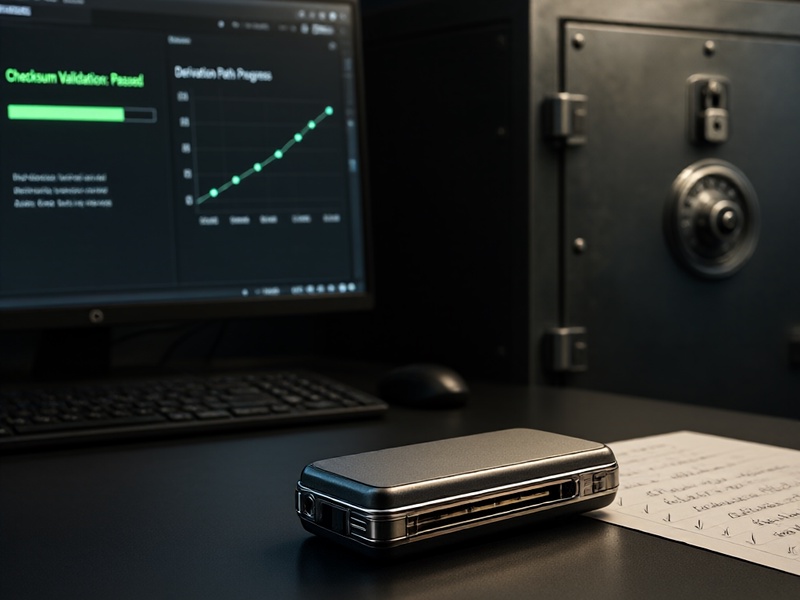
Step 2: Secure the recovery environment
- Work on an air-gapped computer or a live USB with no network access.
- Never type your partial seed into a website, cloud note, email, chat, or mobile app.
- Use open-source tools that can run offline.
- Do not share the 8 known words with a recovery service unless you fully trust the provider and have a legal agreement.
- Prepare a clean destination wallet before you recover anything.
Step 3: Gather every possible clue
The difference between impossible and recoverable is usually information. Collect:
- The 8 known words and their exact positions if possible.
- Any memory of the missing 4 words: first letter, length, sound, theme, or accidental substitution.
- The wallet name, app version, and approximate creation date.
- The BIP39 passphrase, also called the 25th word, if you used one.
- Known receiving addresses, extended public keys, transaction IDs, or balances.
- The derivation path, if you ever exported it.
- Any backup files, wallet.dat files, screenshots, or paper notes.
Step 4: Validate the known words
- Check each known word against the correct BIP39 wordlist. English is most common, but French, Spanish, Japanese, and other lists exist.
- Confirm the order. In BIP39, word order matters completely.
- Check for similar words. For example, a word may be valid but in the wrong position.
- If the phrase came from Electrum, do not force it into BIP39 tools without confirming compatibility.
- If you have a known address, you can use it as a verification target instead of guessing blindly.
Step 5: Use targeted recovery tools
Several open-source tools can help with partial BIP39 recovery:
- BTCRecover: Supports partial mnemonics, known addresses, GPU acceleration, and many derivation paths.
- FinderOuter: Designed for missing words and checksum validation.
- Seed Savior and similar mnemonic recovery tools: Useful for 1 to 3 missing words.
- Ian Coleman BIP39: Useful offline for manual checksum and derivation testing.
- Hashcat or custom scripts: For advanced users with specific filters.
A practical workflow:
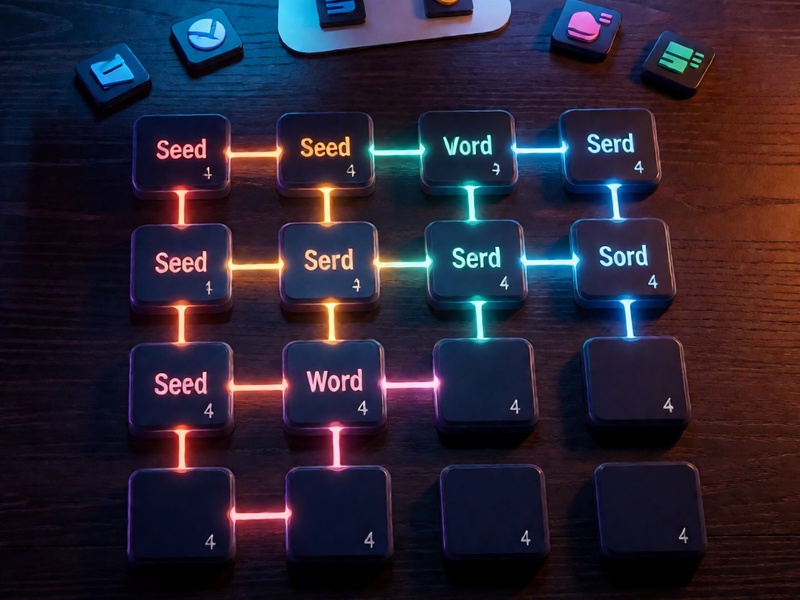
- Enter the 8 known words in their correct positions.
- Mark the 4 unknown positions.
- Apply any memory-based filters to reduce the candidate list.
- Generate candidates and check the BIP39 checksum first.
- Derive addresses for likely paths, such as BCH m/44'/145'/0' and BTC m/44'/0'/0', m/49'/0'/0', or m/84'/0'/0'.
- Compare derived addresses with any known address or xpub.
- When a match appears, restore the wallet offline and move the assets.
Step 6: Reduce the search space with clues
If you are missing exactly 4 words with no clues, the search is very large. Any extra detail helps:
- If one missing word is known to start with a specific letter, the candidate set shrinks by about 128 times.
- If two missing words are known, the search shrinks by about 4 million times.
- If the missing words are adjacent, some tools can optimize the checksum check.
- If you know the last word is the checksum word, its possible values are constrained by the other 11 words.
- If you know the wallet was BCH, test BCH paths before BTC paths.
Step 7: Do not forget the passphrase and derivation path
A correct 12-word mnemonic can still open an empty wallet if you used a BIP39 passphrase or a non-standard derivation path. Test:
- No passphrase first, then common passphrases only in an offline tool.
- BCH coin type 145.
- BTC paths for legacy, SegWit, and native SegWit.
- Any custom path supplied by the original wallet.
- Multiple accounts, such as m/44'/145'/0'/0/0 and m/44'/145'/0'/0/1.
Step 8: Know when to seek professional help
Professional recovery is an option when the search space is too large for your hardware. Choose carefully:
- Prefer providers with transparent pricing, written contracts, and escrow.
- Avoid anyone who asks for the full seed or pressures you through direct messages.
- Ask whether they use offline, audited, open-source tools.
- Understand that no service can guarantee recovery from 8 of 12 words without enough clues.
- If you have wallet.dat or private keys, focus on those first. They may be easier than mnemonic recovery.
Realistic expectations
Recovering Bitcoin Unlimited-related assets from 8 of 12 mnemonic words is possible, but it is not quick or guaranteed. With four truly unknown words and no additional data, you face a trillion-scale search. With memory clues, known addresses, or a passphrase, the task becomes more practical. Always work offline, validate checksums, test the correct derivation paths, and move recovered funds to a new wallet with a complete backup.
Quick recovery checklist
- [ ] Confirm BIP39, Electrum, or another seed format.
- [ ] Verify the 8 known words and their positions.
- [ ] Gather addresses, xpub, passphrase, and derivation path.
- [ ] Build an air-gapped recovery machine.
- [ ] Use BTCRecover or FinderOuter with checksum filtering.
- [ ] Test BCH coin type 145 and common BTC paths.
- [ ] Move assets to a new, fully backed-up wallet.
- [ ] Never share seed words with untrusted parties.
The best recovery method is the one that uses the most information and the least exposure. Start with the clues you have, stay offline, and treat every missing word as a puzzle piece that can either shrink the search space or confirm the final seed.